
Introduction — a shop-floor snapshot
I once stood beside a line of welders on a bright morning and watched the shimmer of heat, the flash, and then the thin ribbon of smoke curl up toward the ceiling. In that moment I thought about welding fume extraction and how little most people notice the machines behind the scenes. We know welding fume extraction is meant to protect workers, but data shows many plants still operate with extraction systems that miss more than half the contaminants at the source (and yes — that’s frustrating). Airflow rate, ductwork layout, and filter choice all matter, and I’ve seen small changes make big health and cost differences.

Think about this: a typical automotive welding cell can produce thousands of micrograms of metal particulate per hour. When extraction is off by even a little, those particulates settle in the cabin and on components, leading to rework, worker sick days, and higher filtration costs downstream. So I keep asking: how do we move from jerry-rigged solutions to systems that actually work every shift? Stick with me — I’ll walk through where common systems trip up and what to look for next.
Part 2 — Where traditional systems fail (a technical look)
dust collectors for automotive manufacturing often arrive with big promises: capture rates over 95%, low maintenance, and easy retrofits. In practice, many installations trip on three technical faults. First, undersized capture hoods and poor hood placement reduce capture efficiency at the weld arc. Second, the wrong filtration media—choosing standard filters over proper HEPA or pleated media—lets fine particulates pass through. Third, energy systems and controls are outdated; variable-frequency drives or modern power converters are missing, so fans run inefficiently. I’ve measured systems with solid fans but terrible capture because the hood geometry was wrong.
From a maintenance angle, baghouse clogging and overloaded cyclone separators are common. Without clear access for filter swaps and no real-time monitoring (think edge computing nodes that report pressure drop), teams only react when production slows. Look, it’s simpler than you think: better hood design, matched airflow, and scheduled filter changes cut visible dust and costs. But these fixes require upfront thinking—shop layouts, ductwork routing, and capture velocity calculations—to be effective. So, yes, the tech exists. The problem is that adoption is uneven and service practices lag.
Why do common systems fail?
Mostly because installers treat extraction as an add-on. They tidy ductwork, but they don’t model the weld plume. They swap filters when someone complains. I prefer designing capture systems from the weld outward — that keeps airborne metal particulates from ever reaching the breathing zone.
Part 3 — New principles and practical steps forward
What’s next is less about single gadgets and more about integrated principles. Modern designs pair optimized hoods with matched fans, proper filter media, and digital controls. When I talk about improvements I mean: modeling plume behavior, using HEPA or high-efficiency pleated cartridges, and adding sensors that monitor airflow and differential pressure in real time. Those edge computing nodes can send alerts before a baghouse clogs, and that prevents surprises on the line. Also, using variable-speed drives reduces energy draw while keeping capture velocity consistent — and yes, that saves money.
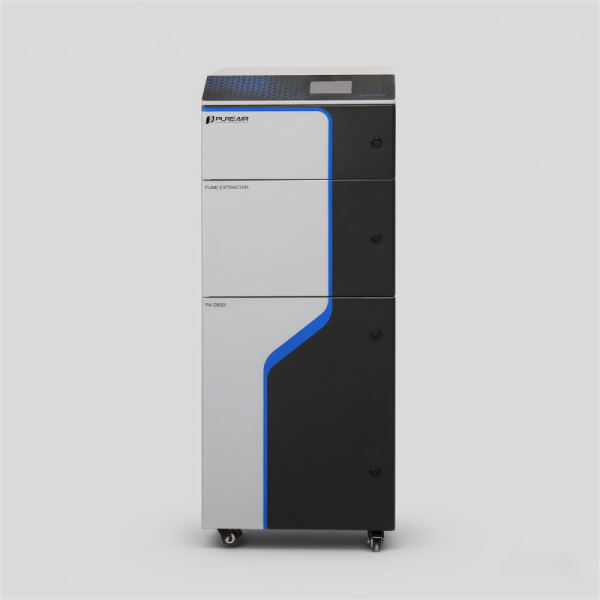
Compare two plants I worked with recently. Plant A upgraded ducts and hoods but kept old controls; capture improved, but maintenance time stayed high. Plant B rebuilt capture hoods, installed modern filters, and added real-time monitoring — result: 40% fewer filter changes and measurable drop in airborne particulates. Bottom line: match hardware, controls, and service. — funny how that works, right?
What to evaluate next
If you’re choosing or upgrading a system, I recommend three practical metrics. First, capture efficiency at the source: measure at the weld hood during operation. Second, total cost of ownership: factor energy, filter spend, and downtime. Third, maintainability and monitoring: can techs swap filters quickly, and does the system give actionable alerts? These three checks separate band-aids from real solutions.
I keep this straightforward because lives and line output depend on it. I’ve seen the difference hands-on, and I believe better planning beats last-minute fixes. For deeper product options and systems engineered for production environments, check solutions like PURE-AIR.