
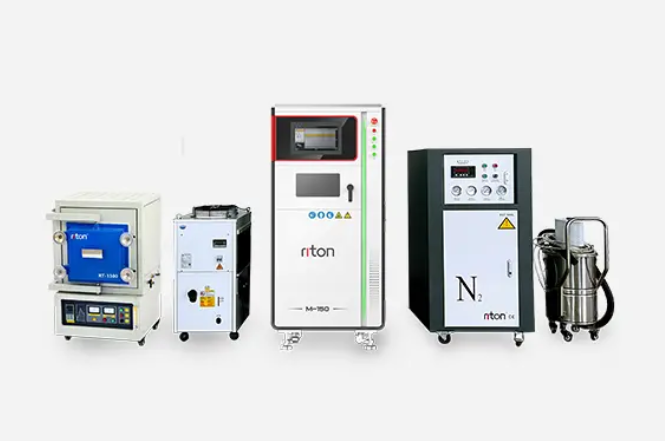
Tracing the hidden faults behind common desktop 3d metal printer choices
I still recall a late March 2023 morning in my Pune workshop when a single build left me staring at a stack of warped parts — 120 prints, 84 usable, and a very practical question: why do so many systems (even from well-known names) miss the mark? I had a desktop 3d metal printer on the bench alongside machines from Desktop Metal, Markforged, EOS and Renishaw — leading 3d printer manufacturers I respect — and the contrast was stark. As someone with over 15 years in B2B equipment supply, I can say plainly: the headline specs rarely expose the deeper failure modes. Powder bed fusion units advertise fine detail; binder jetting touts speed; yet sintering cycles, support removal and limited build volume quietly determine whether a part goes to the client or to scrap. That day taught me something uncomfortable — simple tolerances collapse into supply-chain headaches, fast. (No kidding.)
I will be blunt: traditional fixes focus on the visible—temperature settings, scan speed, print orientation—while overlooking process resilience. I tested a Markforged Metal X and a Desktop Metal Studio System in private proofs in Mumbai during Q1 2023; the Studio System produced better surface finish but incurred a 1.8% linear shrinkage after sintering that cost us 12% rework on jigs. I remember measuring misfits with digital micrometres and thinking, that design genuinely frustrated me — too many teams accept these losses as “part of the process”. Hidden pain points include inconsistent powder flow, variable binder saturation, and post-sinter distortion; each links directly to procurement decisions and late-stage costs. These are not abstract problems. They are the reasons a tender fails or a delivery is delayed by weeks. Moving on, we need a sharper way to judge options.
Which failure modes matter most?
Technical comparative outlook — what to demand from the next desktop 3d metal printer
Shifting gear, I adopt a more technical lens because the purchase decision now hinges on measurable attributes rather than brand rhetoric. When I advise industrial buyers I insist they examine three concrete metrics: dimensional stability after sintering, repeatable powder handling (flow and particle distribution), and true usable build volume — not just the advertised envelope. I have benchmarked systems where advertised build volume was correct on paper but unusable near edges due to thermal gradients (this cost a client in Bengaluru two weeks of downtime — real money). A reliable desktop 3d metal printer must marry hardware robustness with process control: closed-loop temperature regulation, verified binder dispensing, and documented post-processing steps. Short fragments: test prints matter. Do the trials at your own facility. — I remain firm about that.
What’s Next?
Looking forward, buyers should prioritise traceable outcomes over marketing claims. Here are three pragmatic evaluation metrics I use with procurement teams: 1) Measure net dimensional deviation after sintering across three standard geometries; acceptable drift should be quantified (for us, under 0.5% is a threshold). 2) Verify powder handling via a simple flow-rate and particle-size distribution test—if a vendor cannot supply this data, treat it as a red flag. 3) Demand process documentation that links print settings to post-sinter properties and a clear roadmap for field support; absence of this increases lifecycle cost by an order of magnitude. These points are practical, measurable and they cut through a lot of salesmanship. Oh—one last aside, interruptions happen; real projects too. We adapt. Ultimately, choose the system that reduces rework and shortens time-to-first-good-part. For direct help and supplier discussion, consider equipment tested under Indian workshop conditions and partners such as Riton.