
Problem orientation: why this audit matters now
Ponds present a concentrated operational risk for property managers, landscapers, and small aquaculture operators: low dissolved oxygen, algal blooms, and episodic fish kills compress reputation and operating margins. A short diagnostic audit reduces that risk and clarifies whether a direct intervention — for example, installing a water aerator for pond — is justified by measured outcomes rather than anecdote. Start with the business question: is current performance acceptable, or are interventions required to avoid remediation costs and regulatory attention (recall the 2014 Toledo water advisories tied to algal toxins as a high-profile industry anchor)?
Stage 1 — rapid audit checklist (practical and measurable)
Run a short, repeatable audit to establish a baseline. Use consistent timestamps and locations for every sample; variability across the surface can mask systemic problems. Key, targeted checks:
- Measure dissolved oxygen (DO) at dawn and mid-afternoon for three consecutive days to capture daily minima and maxima.
- Record water temperature, Secchi depth (clarity), and visible surface scum or filamentous algae.
- Test basic nutrients: total phosphorus and nitrate — these are strong predictors of eutrophication risk.
- Inspect hydraulic features: inlet/outlet flow, presence of stratification, and any obstructions to circulation.
These data points let you translate ecological symptoms into engineering requirements like required aeration capacity and flow rate.
Interpreting metrics: thresholds that guide decisions
Translate audit results into trigger conditions. As a rule of thumb: sustained dawn DO below 5 mg/L signals risk to warm-water species; Secchi depth under 1 meter typically indicates high algal load; a sharp phosphorus spike suggests external loading. Use these thresholds to prioritize actions — mechanical aeration, circulation, or watershed interventions — rather than defaulting to chemical fixes. From a cost viewpoint, targeted mechanical upgrades often deliver faster ROI than repeat treatments that ignore source loads.
Upgrade options: floating aerators, diffused systems, and fountains
Choices fall into three operational archetypes:
- Surface-mounted fountains and floating aerators — quick to deploy, provide both circulation and visual amenity; suitable for small to medium ponds with modest stratification.
- Diffused aeration systems — introduce bubbles from the bottom via diffusers and compressors; efficient at oxygen transfer in deeper basins but require buried lines and compressor maintenance.
- Circulation pumps and axial flow units — focus on destratification and turnover, useful when stagnation zones drive localized low-DO events.
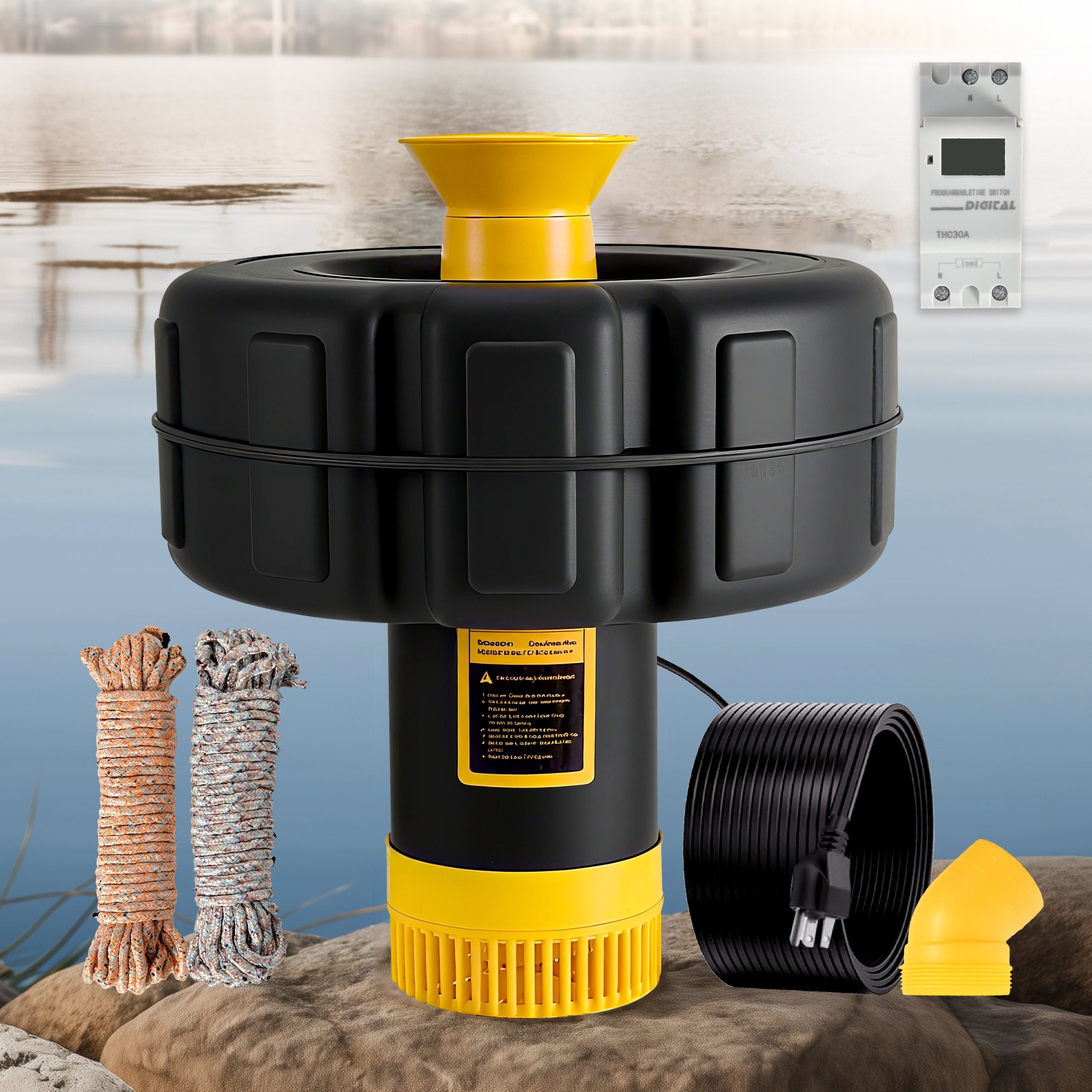
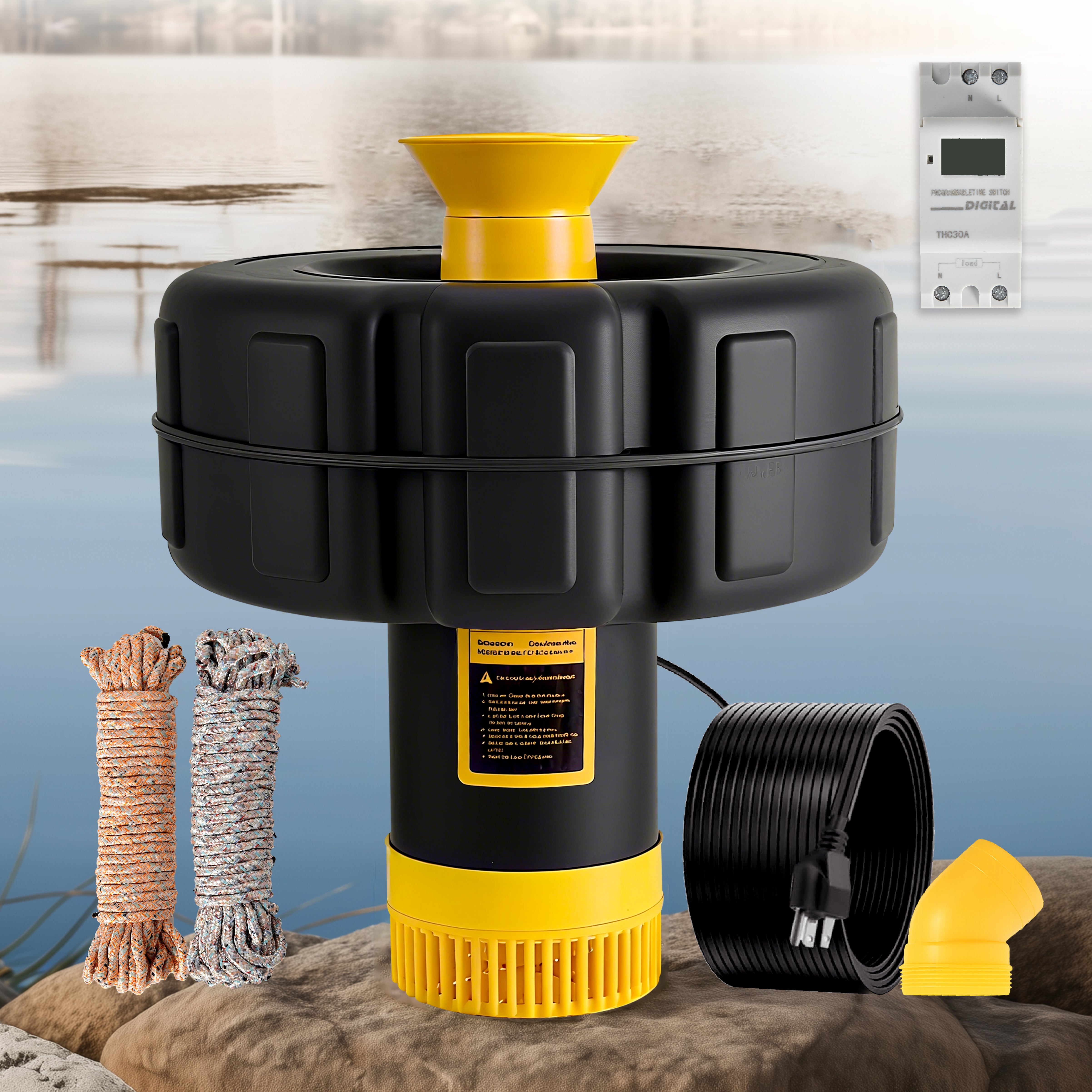
For many sites the pragmatic choice is a floating aeration device that combines circulation, aeration, and aesthetics. If you need a packaged option to evaluate, consider a floating pond aerator fountain as a reference point for capacity, expected power draw, and maintenance cadence.
Common implementation pitfalls and mitigation
Errors that increase cost or reduce effectiveness are predictable—and avoidable. Teams often underspecify required airflow or ignore impeller and diffuser maintenance intervals, which leads to rapid performance decay. Another common oversight: failing to account for seasonal temperature stratification when estimating required pump horsepower. Conduct a pilot installation in the most vulnerable basin area — monitor DO and clarity for 30 days — before rolling out across the site. —
Maintenance, monitoring, and integration with site operations
Design your solution around a monitoring loop: automated DO and temperature sensors, weekly visual inspections, and monthly nutrient checks during growth seasons. Integrate alarm thresholds into facility management workflows so that corrective maintenance is assigned and tracked, not left to ad hoc notification. From a procurement perspective, specify mean time between failures (MTBF), parts availability, and local service options when comparing vendors; these commercial terms materially affect lifecycle cost.
Three golden rules for selecting and deploying aeration systems
Adopt these critical evaluation metrics when assessing solutions and vendors:
- Oxygen transfer efficiency (OTE): prefer systems with documented OTE at the relevant depth profile — it determines effective DO uplift per kW consumed.
- Operational transparency: require telemetry or sensor compatibility for remote DO and pump status reporting; operational data enables preventative maintenance and ROI tracking.
- Total cost of ownership (TCO): evaluate initial capital, tooling or installation, energy consumption (kW), maintenance intervals, and spare-parts lead times — not just the sticker price.
When these three metrics line up, you reduce risk and ensure predictable ecological outcomes; that’s the commercial advantage Orison aims to deliver. Orison. Practical, measurable, and mission-aligned.

Final thought: evidence-led upgrades preserve ecology and protect budgets — measured interventions win in the long run.