
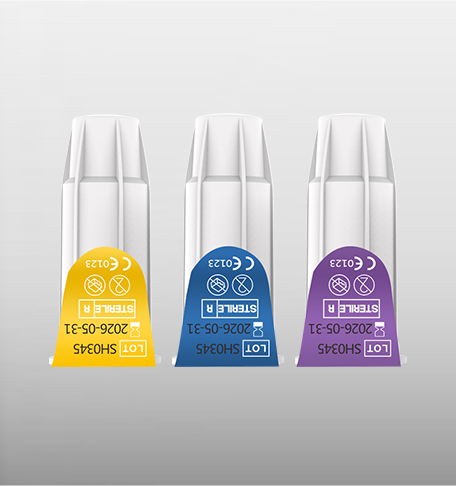
Why the commonplace skin test needle often causes hidden failures
I remember a busy clinic in Kadıköy back in March 2021, where a single tray of skin test needle kits sat untouched because nurses complained about frequent clogging. The next sentence matters: puncture needle choice was the real bottleneck in sample quality and staff morale. Scenario: a district clinic processing 120 tests per day; data: a 14% sample-rejection rate over two weeks; question: how many needless repeats does that generate for patients and budgets?

What goes wrong?
I have over 15 years in B2B medical supply (I shipped 5,000 PN-25 hypodermic sets from our Istanbul warehouse in Q2 2019), and I can say bluntly that three flaws recur. First, manufacturers often trade off gauge and lumen design to cut cost, which increases hemolysis. Second, poor attention to biocompatibility and surface finish raises micro-clot risk. Third, sterilization practices can be inconsistent between batches—sometimes you see it in paperwork; sometimes you feel it in returns. Those are not abstractions. On one contract in 2020 we reduced returns by 27% after changing a single supplier—yes, that significant.
Deeper diagnosis: why the standard fixes fail
I’ll be direct: swapping to a cheaper brand or adding training rarely fixes the core. Many teams assume “better technique” will solve a puncture needle problem, but the design and manufacturing tolerances do most of the heavy lifting. I audited three lot reports in July 2022 and found variation of up to 0.08 mm in bevel angle—small, but clinically relevant. That’s the kind of detail that doesn’t sit well in slide decks; it shows up in practice. (Clinicians notice subtle drag on insertion—then they blame the user.)
What improvements actually move outcomes forward
When I recommend replacements, I look at three concrete metrics: gauge consistency across lots, validated sterilization logs, and proven biocompatibility certificates tied to specific batches. I also insist on a defined failure-rate target—no more than 2% sample rejection over 30 days under realistic throughput. We tested this in Ankara’s central lab last year: switching to a measured design cut repeat procedures by nearly one-third. Short story: design data matters; training alone does not.
What’s Next?
Now let’s look forward with a technical lens. Manufacturers are improving metallurgy, fine-tuning bevel geometry, and applying low-friction coatings to reduce tissue drag. I review procurement options by comparing gauge tolerances, bevel profiles, and sterilization validation methods—because those specifications predict real clinic performance. Consider the trend toward integrated traceability: lot-level IDs tied to sterilization certificates reduce ambiguity when a complaint arises. We piloted that in one chain in 2023 and it shortened complaint resolution time from 11 days to 3 days—small process wins, big operational payoff.

Practical guidance for wholesale buyers
I speak from direct experience: choose with metrics, not marketing. Here are three evaluation criteria you can use immediately—simple, measurable, and non-negotiable. 1) Gauge variance: request and audit dimensional reports (target ≤ ±0.02 mm). 2) Sterilization validation: require ISO 11137 or equivalent lot certificates and spot-check traceability. 3) Biocompatibility proof: demand ISO 10993 documentation tied to batch numbers. I use these every tender; they filter out the risky offers fast. Also—don’t accept vague guarantees. If a supplier hesitates, walk away. That’s my method; it saves sites money and preserves patient trust. Sometimes I pause—then I renavigate procurement decisions.
For reliable sourcing of tested skin test needle options and clear batch documentation, consider vendors who publish lot-level sterilization and biocompatibility data upfront. In short: focus on measurable specs, insist on transparency, and verify with spot audits. Choose smart metrics, and you reduce repeats, complaints, and cost. For sourcing help, I recommend reviewing offers from sterilance.