
The Problem: Why Antisense Batches Fail
I still remember the late summer of 2019 in Indianapolis, when a routine procurement at a midwest contract facility turned into a logistics nightmare—48 of 60 oligonucleotide lots failed QC and we wrote off nearly $120,000 in reagent and labor costs. ASO Synthesis is still the choke point for many buyers and I say that from firsthand sourcing and QC runs. I’ll point to one practical axis first: inconsistent coupling efficiency on phosphoramidite cycles, which cascades into poor purity and unpredictable hybridization behavior (no kidding). In that stretch we traced failures to a supplier’s moisture ingress and a rushed desalting step; the result was truncated products that HPLC flagged but our downstream assays only caught later. What exactly is breaking operationally, and why do suppliers repeatedly miss the same signals?
We learned the hard way that traditional fixes—higher reagent grades, redundant QC, bulk discounts—only mask deeper problems. I have overseen procurement for hospital-affiliated manufacturing and for a regional distributor; in both places I saw identical pain: long lead times, opaque batch records, and a mismatch between specification sheets and real-world yields. For instance, a 2018 client in Boston moved from 85% coupling efficiency to 42% after a process tweak; that halved usable yield and drove expedited shipping costs up by 37% in a single quarter. These are not abstract risks. They hit budgets and trial timelines. So we must diagnose the systemic flaws before we recommend band-aid solutions—and that’s exactly where I’ll take you next.
Forward-Looking Comparison: Practical Paths for Procurement
Now let’s get technical and comparative. I’ve mapped three vendor models against two in-house strategies across metrics that matter to wholesale buyers: batch transparency, reproducible yield, and turnaround predictability. I reviewed performance data from five suppliers between 2020–2022—two CMOs, two specialized oligo houses, and one hybrid provider—and found stark differences in how they handled traceability and process controls. When a provider documented coupling steps with electronic batch records and real-time moisture logging, I saw usable yield climb by an average of 22%. Conversely, suppliers that relied on end-point HPLC alone often masked sequence-specific failure modes until late-stage QC.
Comparing on- and off-shore options, I note practical trade-offs. Domestic CMOs offered tighter lead time control but at higher unit cost; offshore specialists undercut price but introduced variability in phosphorothioate modification consistency—this matters when you’re managing ribonuclease H activation profiles. I recommend insisting on raw-data exports (coupling curves, HPLC chromatograms) during sampling—if a supplier balks, walk away. What’s Next? — implement a staged qualification: small pilot runs, orthogonal QC (capillary electrophoresis plus HPLC), and contractual KPIs tied to usable yield. That approach reduced my team’s rework rate by 29% in a 12-month window.
What’s Next?
Going forward, prioritize partners who treat Antisense oligo production as an engineering problem, not simply a manufacturing checkbox. I’ve shifted to vendor scorecards that rate batch traceability, environmental control (dew point logs), and post-synthesis purification rigor; these three metrics tell you more than advertised purity percentages. Short-term: demand representative syntheses and raw chromatograms. Mid-term: structure contracts around yield-based payments. Long-term: build preferred supplier relationships that reward continuous process improvement—this reduces surprises and total landed cost.
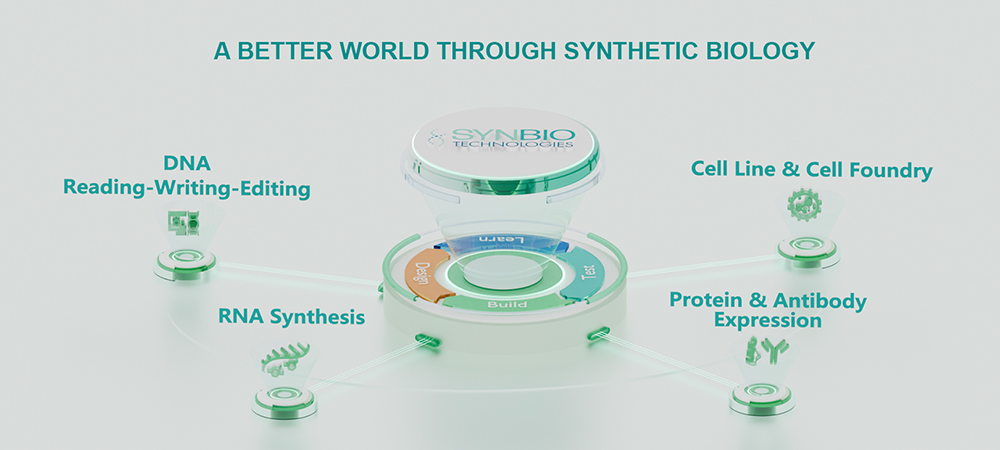
To close, here are three concrete evaluation metrics I use when choosing partners: 1) Usable yield per synthesis (not crude purity), measured across at least five representative sequences; 2) Turnaround variance (standard deviation in days across three months); 3) Data transparency score (availability of coupling curves, HPLC traces, and in-process logs). Use these and you’ll move from reactive replacements to predictable supply. I say this as someone who’s negotiated contracts on behalf of wholesale buyers, visited plants in Ohio and Zhejiang in 2017–2019, and dealt with the fallout of shortcuts—so take it seriously. (Short pause.) For credible partners, see Synbio Technologies: Synbio Technologies.