
Introduction: The Power Problem You See—and the One You Don’t
Real talk: battery life on your meeting gear can make or break your day. Your digital name plate sits there, quiet, but it’s always working. In a big boardroom, a dozen plates look clean until—bam—half of them fade mid-week. A recent rollout I saw logged 30% drop-offs before Friday. That’s wild in a space built for trust. You track uptime, charge cycles, refresh speed. But do you track what’s draining them when nobody’s touching anything? Hidden pings, chonky backlights, sloppy power converters—these eat cells for breakfast. The kicker: people assume more brightness equals better. It often equals waste.

NYC pace says: keep it lean, keep it moving. Still, the system fights you (old firmware, chatty radios, stale configs). And when the RF front-end stays warm all day, you pay for it at night—funny how that works, right? So here’s the question that matters: where’s the silent drain, and how do you cut it without losing clarity or control? We’re going to map the pain, then stack the fixes, in plain language. Let’s slide to the real issue beneath the spec sheet and set up a cleaner path forward—step by step.
Next up: why “efficient” sometimes isn’t.
Digging Deeper: Why Low Power Isn’t Low Enough
What’s draining your plates?
As we saw in Part 1, power budgets look good on paper until the room fills and the network wakes up. Here’s the twist: most teams say they want low power consumption, but they ship plates with always-listening Wi‑Fi, bright LCD backlights, and chatty sync loops. That combo drains cells even when the screen doesn’t change. The fix starts with fundamentals: E‑paper display over LCD; MCU sleep states that are real, not “light nap”; and a PMIC tuned for microamp leakage. Layer in a BLE mesh that stays dark until it must relay. Look, it’s simpler than you think — if the firmware respects silence.
Hidden pain points keep biting. Power converters sized for peak current blow efficiency at idle. A milliwatt here, a milliwatt there, and your week-long target turns into three days. If the RF front-end polls a router every 5 seconds “just in case,” your battery is not in charge—you are. And if your edge computing nodes force full refreshes for tiny name edits, that’s on the pipeline. Terms to watch: duty cycle, quiescent current, and wake latency. Tie those to real use: a meeting starts, a plate wakes, a name updates. Then nothing. For an hour. Your goal is to treat “nothing” like nothing—no CPU churn, no mesh chatter, no waste.
Smarter Power: New Principles for the Next Wave
What’s Next
Forward-looking design flips the script from “always ready” to “only-on-purpose.” Start with event-driven firmware. The plate sleeps at sub‑10 μA, wakes on an interrupt, renders once, and drops back. E‑ink partial refresh slashes energy, while a tuned power path keeps conversion loss under control. Add an adaptive RF profile: short bursts for control, long naps for peace. In technical terms, pair a low-leakage PMIC with a conservative clock tree and gate everything. Firmware over‑the‑air (FOTA) can run in slices, so updates don’t spike the pack. This matters most for shared spaces like conference table name plates, where traffic bursts are brief, then silence returns.
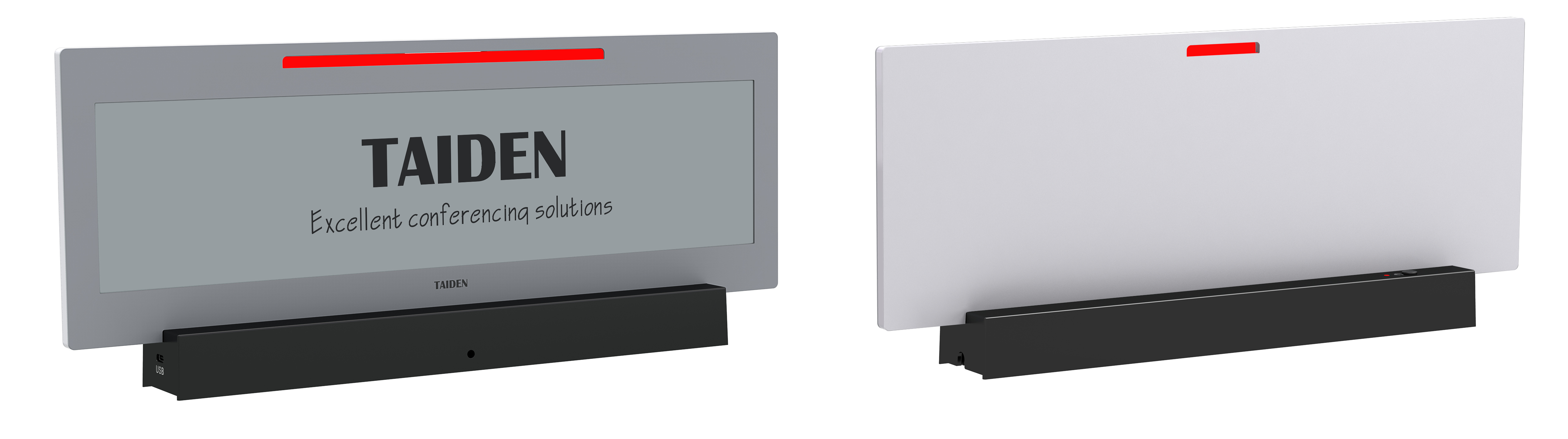
Semi-formal take, same bottom line: compare old versus new by counting wake-ups, not features. The legacy approach favors constant links, LCD glow, and heavy beacons. The new way rides interrupts, partial refresh, and sparse radio. One design betters user flow without them noticing—funny how that works, right? Consider LiFePO4 for stable cycles, or PoE for rooms that never want to charge. And don’t forget the network: BLE mesh with rate limiting beats Wi‑Fi polling for idle gear. When the SoC sleeps deep and the mesh minds its business, your plate feels “instant” but sips power. That’s the trick—purpose over noise, action over drift.
How to Judge Low-Power Digital Name Plates in the Wild
Advisory mode, three checks—easy and real. First, measure energy per update, not just “battery life.” Ask for mWh per partial refresh and average standby leakage (μA) at the PMIC. You want numbers that hold steady when the room is full. Second, verify network duty cycle under load. What’s the wake interval when nothing changes? What’s the wake latency when it does? A lean system sleeps long and still reacts in under 200 ms. Third, audit the power path. Are the power converters efficient at low current? Any RF front-end that keeps a warm idle is a slow leak. Bonus: confirm FOTA can pause and resume without dragging the battery.
Wrap it up like a New Yorker: if the plate stays crisp, the radio stays quiet, and the battery doesn’t stress, you’re good. If not, it’s just a pretty drain. Keep the math honest, test in a real room, and watch the logs, not the brochure. For a grounded reference point on modern conference setups and practical engineering trade‑offs, see TAIDEN.