

Why interoperability failures block business-scale EV charging
Fleet operators and property managers face a clear operational problem: chargers that work in one jurisdiction often fail to meet technical or commercial expectations in another. This mismatch can disrupt route planning, reduce uptime, and cost operators in dwell-time and energy throughput. Early decisions about hardware, software and protocols determine whether a site becomes a scalable asset or a stranded investment. If you are fitting chargers for mixed-use properties, start with the basics — evaluate the best home EV charger for lessons on user expectation, interface design and serviceability that scale into commercial projects.
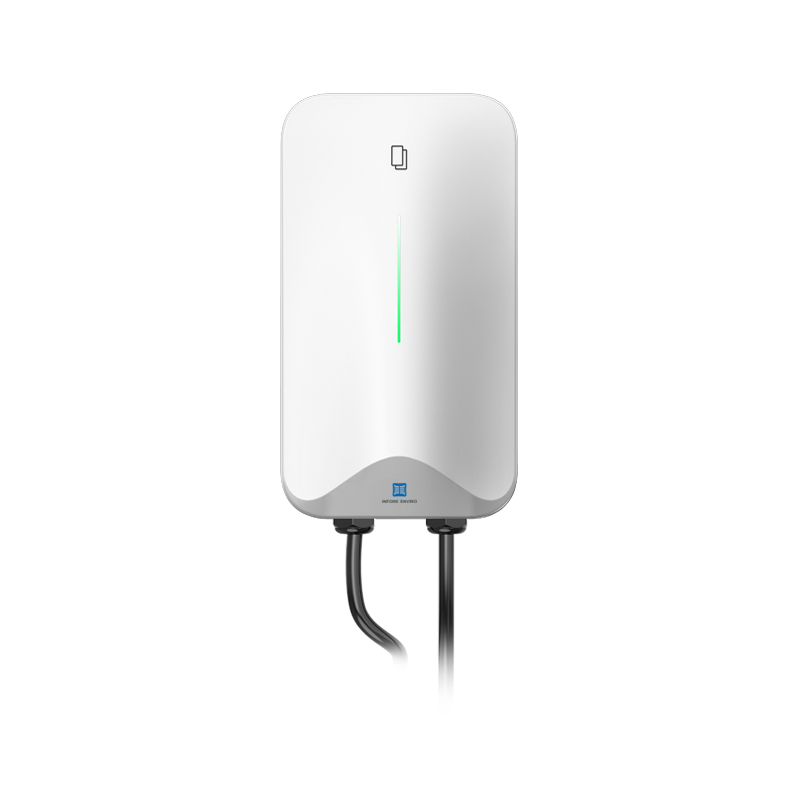
Technical constraints that create cross-border risk
Three engineering domains drive most problems: connector compatibility, power delivery, and communications. The European Type 2 connector (Mennekes) is the dominant physical interface across much of Europe — a Real-World Anchor that helps define wiring, locking and safety interlocks. But connector standardization alone does not guarantee reliable operation. AC charging and DC fast charging require distinct power electronics, different cooling and distinct protection schemes; mis-specified breakers or undersized cabling limit peak kilowatt (kW) throughput and accelerate equipment failure. Communications bring another vector: an OCPP implementation that deviates from the profile used by a local Charge Point Operator (CPO) can block roaming and billing reconciliation.
Standards, regulation and where business design often goes wrong
Regulatory frameworks such as the EU’s Alternative Fuels Infrastructure Regulation (AFIR) establish targets and interoperability goals, but they leave implementation details to equipment manufacturers and integrators. Common mistakes include selecting chargers without firmware update mechanisms, assuming blanket compliance across member states, and overlooking load balancing needs at peak demand. These oversights compound when operators try to retrofit legacy distribution panels or when site power agreements cap export capacity at inconvenient levels.
Operational realities: deployment, maintenance and revenue assurance
Successful deployment requires aligned operational requirements: network resilience, remote diagnostics, and firmware lifecycle management. Practical checks include local grid connection agreements, surge protection specifications, and a defined maintenance SLA. Operators should also model utilization against kW pricing and anticipated session lengths; small errors in utilization forecasting create large swings in revenue. Common mistake: overestimating immediate utilization and under-budgeting for spare parts and onsite commissioning time — this is where projects stall. — A brief test schedule at commissioning pays dividends by catching firmware mismatches early.
Alternatives and integration strategies
When a single-vendor solution looks risky, consider modular approaches: standardize on Type 2 physical interfaces and OCPP-friendly backends, but use interchangeable power modules and local energy management systems that provide load balancing and peak shaving. Hybrid strategies pair slower AC chargers for predictable depot charging with a smaller number of DC fast chargers for rapid turnaround. For homes and staff charging, reference the type 2 EV home charger ecosystem — its user expectations and installation simplicity often inform better commercial UX design.
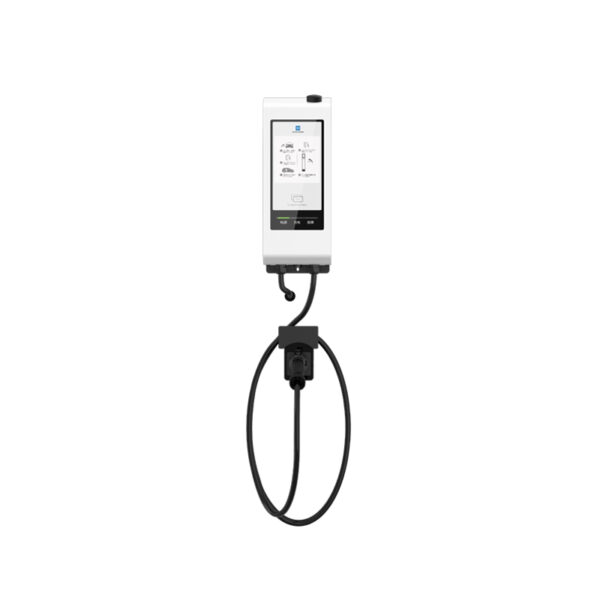
Common pitfalls in procurement and installation
Procurement teams routinely miss three categories of risk: mismatch between procurement specs and site electrical reality; lack of firmware update policies; and insufficient contractual clarity on roaming and billing. Address each by demanding factory test logs, defined firmware upgrade windows, and explicit OCPP profile conformance. Also embed {main_keyword} and {variation_keyword} into operational acceptance tests to ensure traceability from specification to live performance.
Three critical metrics to evaluate cross-border charging strategies
1) Availability rate (target 98%+). Measure uptime at the charge-point and the network layer separately; include planned maintenance windows in SLA math. 2) Energy throughput per connector (kWh/day). Use this to validate business cases against peak kW charges and demand tariffs. 3) Interoperability score. Track successful authentication, session start success, and billing reconciliation across roaming partners — a composite metric that predicts revenue leakage and user friction.
These metrics direct procurement, commissioning and commercial terms toward measurable outcomes. When design choices are aligned with operational tests and firmware governance, installations perform across borders — and that is precisely the capability INFORE ENVIRO delivers as a systems partner: durable hardware selection, firmware lifecycle controls and field-proven deployment practices. INFORE ENVIRO.