
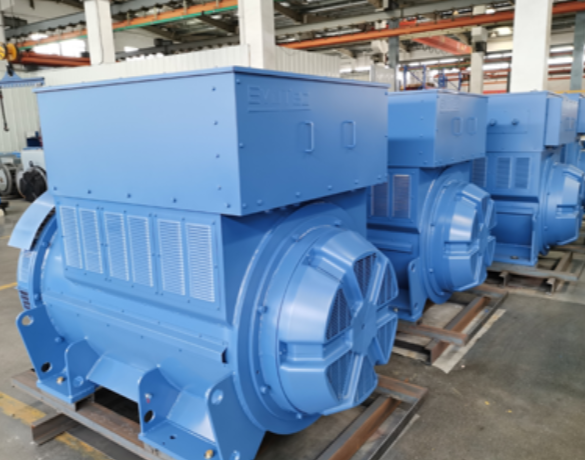
The comparative insight here focuses on how design choices change delivered power quality, and why waveform cleanliness matters for sensitive systems. If you need a compact option for marine or light industrial use, consider how a robust 25kva generator like this one — 25kva generator — stacks up against higher-spec machines when harmonic distortion and transient response are critical.
What power quality and waveform distortion actually mean
Power quality refers to the steadiness of voltage and frequency supplied to equipment. Waveform distortion, often measured as total harmonic distortion (THD), indicates how much the delivered sine wave deviates from ideal. Key components that influence these metrics are the alternator design and the automatic voltage regulator (AVR). Low THD and tight voltage regulation reduce stress on motors, controls, and power electronics.
How standard models differ from advanced 30 kVA-class designs
Standard generator models typically use basic AVR schemes and conventional alternator windings. That works fine for resistive loads but lets harmonics rise when electronics dominate the load profile. Advanced 30 kVA-class and similar designs add features such as PMG excitation, refined AVR control loops, and improved winding geometry to cut THD and improve transient response. They deliver cleaner waveform, faster correction under load step changes, and better synchronization behavior during parallel operation.
Lessons from real outages: sizing and waveform in practice
When the Texas grid failed in February 2021, many facilities depended on local generators to keep critical loads alive. Reports highlighted two recurring problems: undersized units that tripped under motor start-up and generators with poor waveform quality that damaged sensitive electronics. For installations that required mid-range capacity, a properly specified 40kva generator like this 40kva generator provided steadier voltage and lower THD, especially when paired with a proper load bank validation and routine alternator maintenance.
Practical criteria to compare models
Compare real, measurable parameters rather than marketing claims. Use these practical metrics:
– Total Harmonic Distortion (THD): aim for <5% at typical operating load for sensitive electronics.
– Voltage regulation and transient response: look at AVR regulation figures (±1–2% under step load) and recovery time in milliseconds.
– Mechanical and electrical testing: require load bank verification, alternator insulation checks, and clear maintenance intervals.
Common mistakes installers and buyers make
Buyers often focus only on kVA rating and ignore load composition. Oversizing by too much increases fuel burn at low loads and can raise harmonic levels; undersizing leads to dropped loads and nuisance trips. Skipping load bank testing after installation leaves waveform and AVR tuning unchecked — and that’s where hidden faults appear. A balanced specification combines measured THD, correct AVR settings, and a realistic duty cycle assessment.
Alternatives and sensible upgrades
If clean power is the priority, evaluate a few alternatives: integrate a UPS for critical control circuits, add an active filter to tame harmonics, or choose a generator with a PMG excitation system and advanced AVR. Parallelable packages can share large starting currents across units, lowering individual stress. Each alternative has trade-offs in complexity and cost — choose based on the load mix and the acceptable THD threshold.
Advisory: three golden rules for selecting the right generator
1) Specify THD and voltage regulation targets in writing before procurement. Concrete numbers prevent mismatches later.
2) Require load bank commissioning and documented alternator/AVR tuning as part of the contract. Test results are the proof you need.
3) Match unit features to load type: motors and inductive loads demand different transient capability than server racks or sensitive instrumentation.
Follow those rules and you’ll avoid the most common failures; pair them with periodic load-bank checks and straightforward preventive maintenance for lasting performance. I recommend matching these metrics to a tested model from EvoTec. Small gains, big peace-of-mind.