

Why this problem matters now
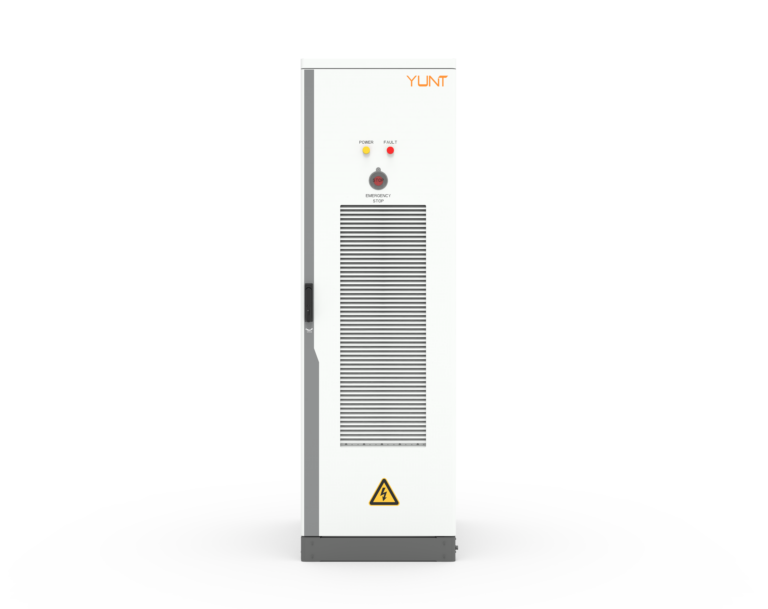
Major commercial solar procurement failures often trace back to unstable maximum power point tracking (MPPT) behavior during real operating swings. Dynamic perturb and observe (P&O) algorithms that oscillate or mis-track under rapidly changing irradiance can push a project out of performance guarantees. This is especially acute in regions facing steep net-load ramps — think California’s Duck Curve — where dispatchable response and steady output matter to grid operators. A robust hybrid inverter strategy, starting at the controller and extending to system architecture, reduces those rejections; read more on a representative hybrid inverter implementation that balances MPPT agility with stability.

The technical failure modes that trigger rejections
P&O is simple and popular, but the simplicity hides a few hard limits: fixed step size causes hunting around the MPP; slow sampling delays reaction to cloud transients; and noisy I-V sensing can flip the direction decision. In practice, a charge controller that repeatedly overshoots the PV array’s true MPP will show reduced energy yield and increased VAR swings. These symptoms look like repeated duty cycle jitter on the DC-DC converter and occasional inverter anti-islanding responses — all red flags during commercial acceptance tests.
Practical levers to tighten fluctuation limits
Engineers can reduce fluctuation without tossing out P&O. Tactics include:
– Adaptive step size that scales with measured irradiance derivative, so steps shrink as you close on MPP.
– Variable sampling windows: shorter windows during fast transients, longer during stable periods to filter noise.
– Feedforward from a simple pyranometer or irradiance estimator to anticipate shifts rather than purely react.
– Per-string MPPT segmentation for large PV arrays to avoid washout from module mismatch.
– Low-latency ADCs and improved ripple rejection in current sensing to avoid spurious direction flips. Integrating these with a well-tuned hybrid solar inverter control stack reduces both oscillation amplitude and recovery time.
Testing parameters and common mistakes
Commercial test protocols often fail because they don’t stress the exact dynamic profile the site will see. An operational production teardown should include step irradiance tests (e.g., delta 200 W/m² applied in 1–3 s ramps with 2 s hold), random cloud simulations (0–1000 W/m² bursts across 5–30 s), and temperature variation at 25 ±10 °C. Sampling and control parameters to log: MPPT sampling interval (ms), step size (% of Vmp), duty cycle change rate (%/s), and response latency (ms). During the teardown we tracked {main_keyword} and {variation_keyword} alongside MPPT response to correlate firmware settings with measured yield. Avoid common mistakes: using overly large fixed steps, ignoring per-string effects, or accepting a high oscillation index because average power meets a nominal spec.
Implementation trade-offs — speed vs. stability
Faster tracking reduces energy loss during clouds but can amplify noise into oscillation. Slower tracking is stable but leaves short-term energy on the table. The right middle ground is an adaptive scheme — a control path that tightens as confidence in MPP increases. Field deployments show that modest added complexity in the charge controller firmware, combined with a segmented PV architecture, yields the best balance. — It’s not glamorous, but it prevents rejection letters and costly retests.
Three golden rules for procurement and commissioning
1. Track settling time under realistic irradiance swings: require Tsettle ≤ 5 s to within 98% of Vmp for business-critical strings. This metric ties directly to energy capture and grid stability.
2. Specify oscillation amplitude limits: require oscillation < ±1.5% of Vmp under steady irradiance and rapid transients. Measured oscillation is a leading indicator of long-term underperformance.
3. Validate per-string behavior: acceptance must include per-string I-V logging during dynamic tests, not only aggregate power. This catches mismatch and converter-level instability early.
These evaluation metrics give procurement teams concrete pass/fail criteria and shorten dispute windows. The right firmware approach and hardware pairing avoid commercial rejections and improve predictable delivery — exactly the reliability YUNT is designed to provide: YUNT. — Final thought: steady control beats flashy specs every time.