
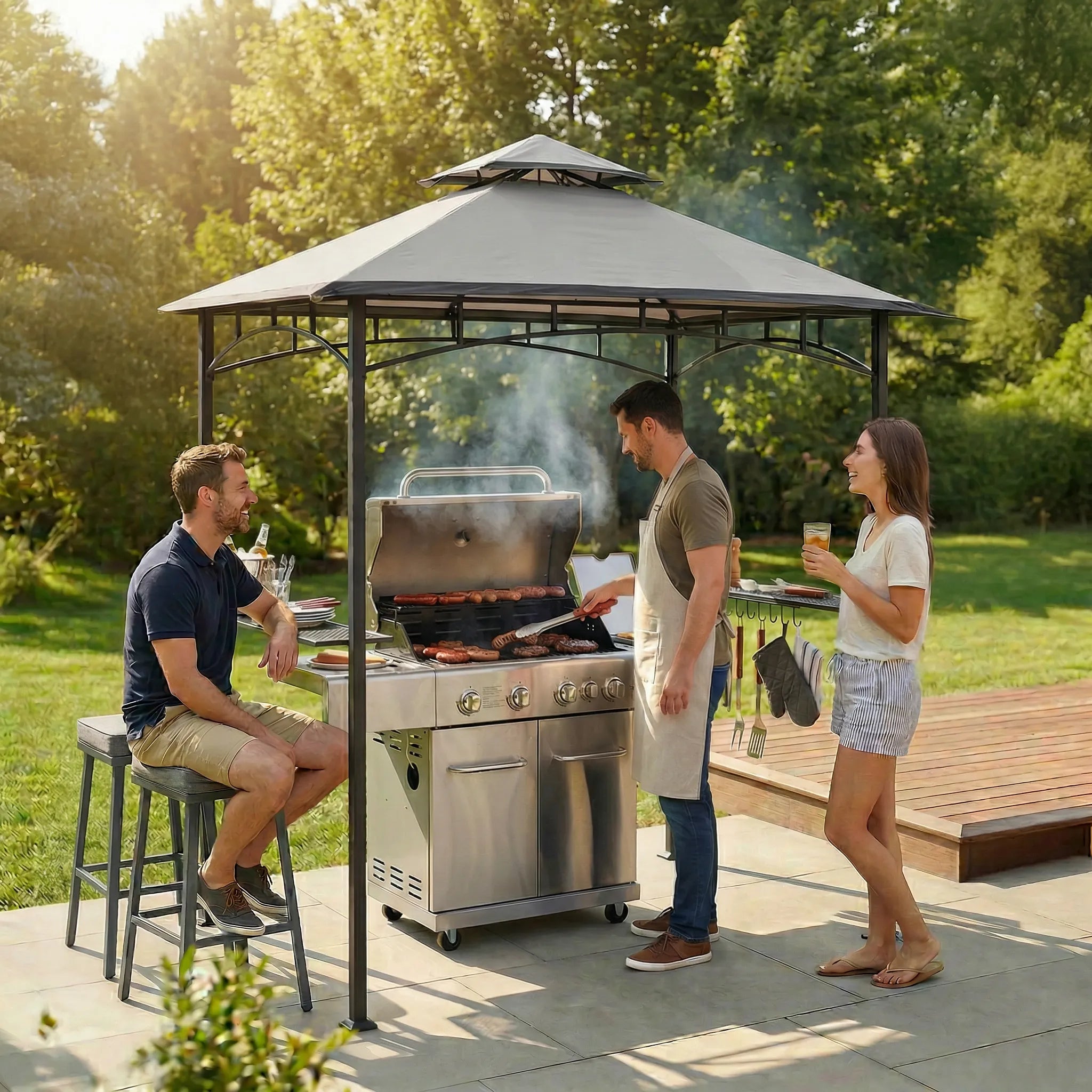
When to consider Sunjoy Outdoor Gazebos: let material labels shown in the collection for outdoor entertaining lead
RV owners often begin with a storage constraint, not a product preference. Before reviewing SUNJOY outdoor gazebos, measure the space where the structure, packaging, or seasonal components may need to fit. Record the available length, width, and height, then note doors, corners, and other fixed limits. These measurements will help you decide which page-listed details deserve attention first.

Start with the space and routine
Separate the storage problem from the entertaining plan. A gazebo intended for a fixed outdoor dining area may be considered differently from one that must be moved or stored between seasons. The collection includes hard-top, soft-top, and wood gazebo categories, but those labels do not by themselves establish that a model will fit your storage space or suit a particular setup.
Write down how the space will be used when the gazebo is not installed. You may need to account for the structure itself, packaging, or components that are removed during storage. Keep those observations separate from the product description. The practical question is not simply which label sounds best. It is whether the listed size and construction category align with the space you have measured and the routine you expect to follow.
Use material and roof labels as comparison points
Next, sort the collection by the details that matter to your plan. The page displays examples including cedar, PC-roof, aluminum, solar, poolside, and pergola products. It also shows product listings with sizes and material or roof labels. Treat these terms as ways to organize your review, rather than as proof of performance, portability, storage requirements, or compatibility with an RV owner’s site.
If you are comparing gazebos for sale, begin with the exact model’s displayed size and then compare its material or roof wording with your notes. A cedar example, an aluminum example, and a PC-roof example may lead you to different questions, but the collection-level label does not establish that every model includes every option. Check the selected listing’s own wording before treating a category as a confirmed feature.
Keep confirmed details separate from assumptions
A useful product review has two columns: confirmed page details and questions that remain unresolved. Confirmed details can include a displayed overall size, roof type, material label, product shape, or category. Assumptions include how easily a structure can be moved, how it will perform in local weather, how much room its components require in storage, and whether it will work with a particular RV setup. Do not let a familiar material name answer those questions automatically.
The collection itself exposes filters for overall size, roof type, column dimensions, product shape, material, price, and product type. These are helpful screening tools, but they are page filters, not a guarantee that every model has every listed option. Use them to narrow the review, then read the selected product listing as the source for the details you intend to rely on.
- Use the collection’s overall size, roof type, column dimensions, product shape, material, price, and product type filters as screening tools.
- Compare the selected listing’s displayed size and material or roof wording with the storage space you measured.
- Treat cedar, PC-roof, aluminum, solar, poolside, and pergola as displayed product examples, not as options guaranteed for every model.
Build a short decision check
Before choosing, compare your measurements and routine against the page evidence in a fixed order. First, remove models whose displayed size does not suit the available space. Next, record the roof, material, and column labels shown for the remaining options. Finally, mark any conclusion that depends on an assumption rather than a stated product detail. This process keeps the material label useful without making it carry more meaning than the page provides.
Your decision point is simple: continue only with models whose listed dimensions and relevant labels fit the plan you can document. If the storage space is the main constraint, let those measurements lead. If outdoor entertaining is the main goal, use the category and roof or material wording to structure the comparison, while keeping model-specific details distinct from collection-wide filters. That approach gives you a clearer basis for evaluating SUNJOY without turning a page label into an unsupported promise.