
Introduction — a short scene, some numbers, a sharp question
I was on the shop floor last week watching a small welding team pause every hour to clear the haze. The shop smelled like burnt metal and coffee — familiar, but not normal. Fume extraction technology is supposed to stop that; instead, we watched workers step away and lose focus. A recent internal survey I read showed about 40% of workers in similar shops report frequent air quality problems and disrupted work. So I asked myself: why do systems meant to help so often slow us down? (I mean, really—what’s going wrong here?)
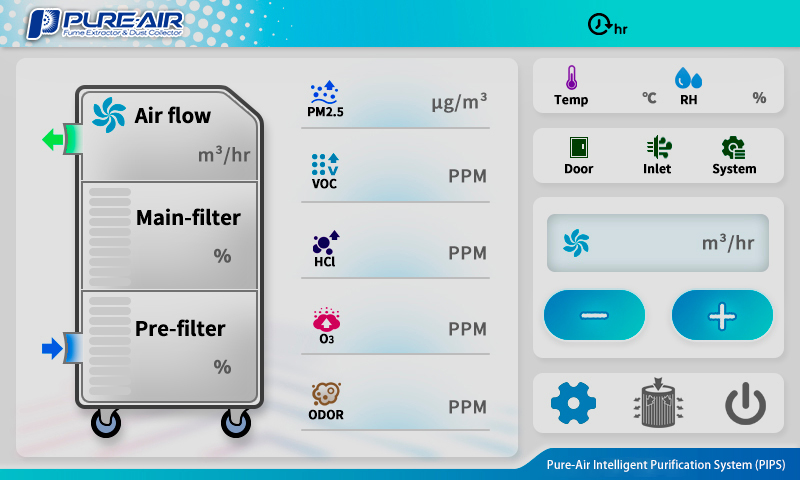
Let me be direct: poor extraction is not just an engineering issue. It is a human problem. Time lost, complaints, and small health issues add up to big costs. I want to walk you through why simple fixes beat complex band-aids, and how modest changes in fan placement, ductwork routing, and filter choices can change a day’s work. Next, I’ll dig into what traditional solutions miss and where you should look first.
Why many traditional systems fail — technical look at real flaws
HEPA air purifier industrial installations often arrive as a promise: clean air, fewer pauses, better safety. But in practice, installers bolt on units without thinking about airflow balance, fan curves, or the placement of extraction hoods. I’ve seen properly rated HEPA filters sitting far from the source while long runs of poorly designed ductwork leak or kill suction. The result: partial capture, high particulate matter (PM2.5) readings near the operator, and frustrated technicians. Look, it’s simpler than you think — focus on capture at the source, not glory units mounted on a wall.
What breaks first?
From my experience, the weakest links are usually: mismatched fan curves, clogged pre-filters, and poor hood design. Add to that ignored metrics like air changes per hour (ACH) and you have a system that technically works but fails people. I’ve measured cases where edge computing nodes on a monitoring panel showed “green” while real exposure stayed high. Why? Because the monitoring point was in the wrong place. I feel strongly that engineers should walk a shift with operators to see patterns of use — that hands-on check reveals the invisible problems mechanical drawings miss.
Principles for better systems — what to build next
What’s next? Start with clear principles: capture first, then filtration, then monitoring. Newer units still need basic rules: put the extraction hood close to the source, size ducts to match fan curves, and use sensible redundancy for power converters and fans. I’ll explain in plain terms: capture the plume; don’t chase it. And yes — pairing a local HEPA unit with proper source capture often beats a single central system for small bays. HEPA air purifier industrial devices are great — but only when they are part of a system designed around worker behavior and realistic airflow.
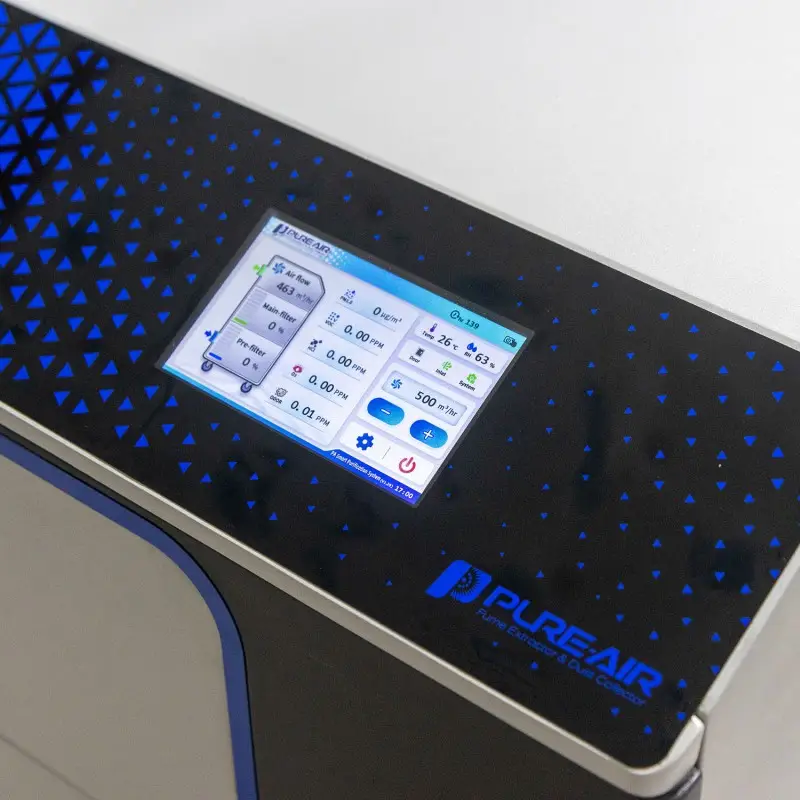
Technically, we should also think about monitoring placement (not just adding sensors), maintenance cadence for pre-filters, and the ergonomics of hoods so operators don’t work around them. I’ve seen clever dashboards that confuse the team — dashboards that report averages instead of peaks, for example. The future is not just smarter devices, but smarter deployment. — funny how that works, right? If you combine simple capture rules with periodic verification and a sensible maintenance plan, you get measurable improvements in both air quality and uptime.
Closing advice: how I evaluate solutions
I’ll finish with practical metrics I use when choosing or approving an upgrade. These are short, testable, and — importantly — grounded in how people work. First, capture efficiency at the operator position (measure peak exposures, not room averages). Second, system resilience: redundant fans and sensible power converters so one failure doesn’t shut the bay. Third, maintainability: how easy is it to change pre-filters, service a motor, or adjust a hood during a break? If a proposal fails any of these, I ask for a redesign.
In the end, we want systems that workers trust and use without thinking. I believe small, well-placed HEPA-grade filtration combined with smart capture and honest monitoring makes the biggest difference. When teams see fewer pauses and breathe easier, you get safety and productivity — not one at the expense of the other. For practical help and proven systems, I recommend checking work by brands that focus on integration and field-proven setups — like PURE-AIR.