
Start with what matters to your household
You’re juggling schedules, budgets, outdoor comfort and a desire to cut energy bills — the right solar structure should simplify, not complicate, that list. Think about daily use: morning coffee, afternoon play, evening meals. A solar pergola can deliver shade and meaningful generation if you match size, panel placement and controls to how your family actually lives outside.
How I help readers decide — a user-focused checklist
I break purchases into small, practical choices you can check off. Start with three clear answers: how many hours will the space be used, do you want roof-integrated panels or mounted modules, and how much maintenance can you realistically commit to? From there, prioritize: steady shade and low upkeep often beat maximum kilowatt-hours for busy households. I’ve guided homeowners through hundreds of installations; small upfront clarity prevents big regrets.
Common mistakes families make
People pick the flashiest design and then realize it blocks airflow, complicates drainage, or makes panel cleaning harder. Another frequent error: sizing for a rare party instead of daily needs. Underestimating local wind and snow loads is costly too — those structural specs matter more than the color of the beams. Plan for access: if panels sit flat, who will clean them and how often?
Real-world perspective with a practical anchor
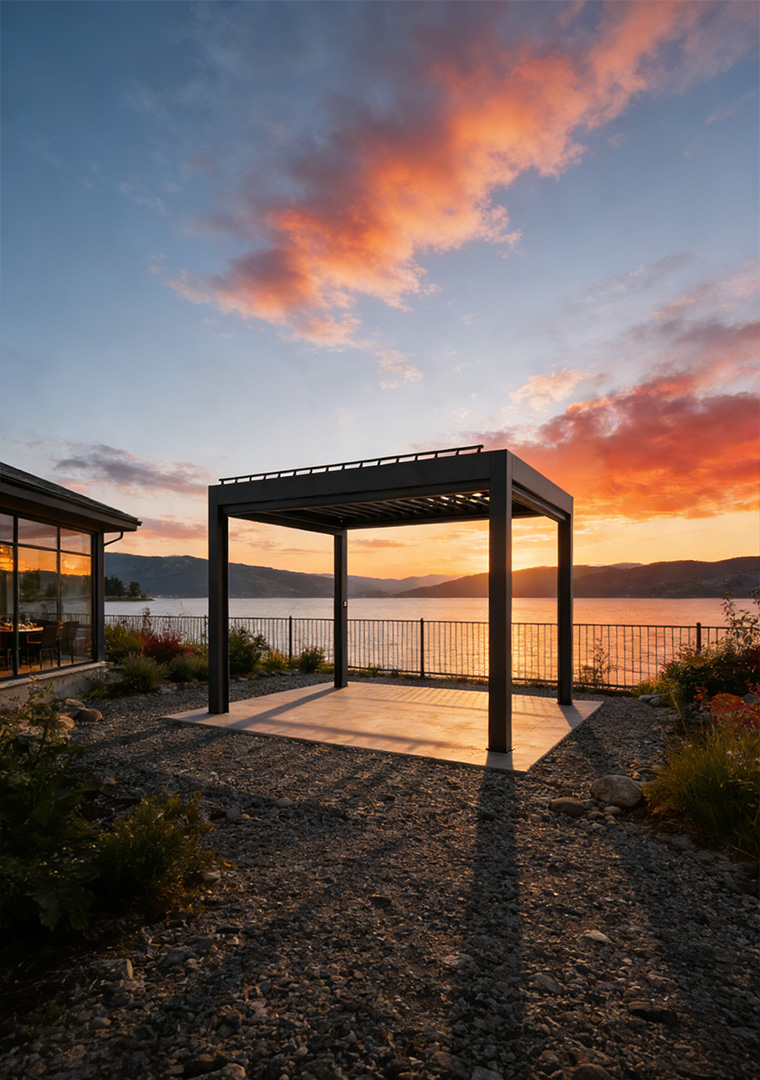
In Southern California, where outdoor living is nearly year-round, homeowners often choose adjustable shading to balance solar gain and comfort; I’ve seen many retrofit projects improve both comfort and generation. A popular solution in that market is the louvered pergola, which lets people tilt blades for sun, rain protection or airflow depending on the hour. That kind of flexibility scales nicely for families who need both play space and usable generation.
Alternatives and quick evaluations
Fixed-roof pergolas: simple, lower cost, easier wiring, but less control over shade and light. Louvered systems: flexible, better for multi-use yards, require motors and occasional servicing. Carport-style solar can give higher yield per panel but changes yard layout and aesthetics. If you want low fuss with modest output, go fixed. If you value daily comfort control and can budget a little maintenance, louvered is smarter.
Practical installation and maintenance tips
Pick a licensed installer familiar with rooftop and ground-mounted solar codes in your area. Confirm wind and snow ratings for your exact postcode. Ask how panels are accessed for cleaning and whether controllers are user-friendly. For maintenance, schedule a quick inspection annually: tighten fasteners, check flashing and clear debris. Small, regular checks keep the system reliable without overwhelming your schedule.

Putting it together for your family
Decide what’s non-negotiable — daily comfort, ease of care, or maximum generation — then choose the form that matches. Keep shade and service access practical. Match expectations to the roof type and budget. Trust experience: straightforward choices now save hours and money later. For many households, that balance is exactly the value offered by Light Hunter.