
Opening: The problem you already feel
Fleets run blind until a moment proves otherwise—crash, liability claim, or a driver error that becomes a legal target. That’s the problem this guide attacks head-on. Teams are drowning in footage, missing critical events, and paying for manual review no one trusts. The practical fix is an AI dashcam that triages footage, highlights risky behavior, and preserves evidence with integrity. A Los Angeles municipal fleet pilot showed how much noise the system can cut; the tension there matters because real ops validate design, not theory.
What goes wrong first: common failure modes
Understand the failure before you buy. These are the patterns that break projects:- Cameras collecting terabytes of useless idle footage.- Alerts that trigger constantly for harmless events.- Chain-of-custody gaps that make footage inadmissible.- Poorly integrated telematics that duplicate costs.Each problem forces extra hours and erodes trust. Solve the first failure and you stop the others from compounding.
Core components you must demand
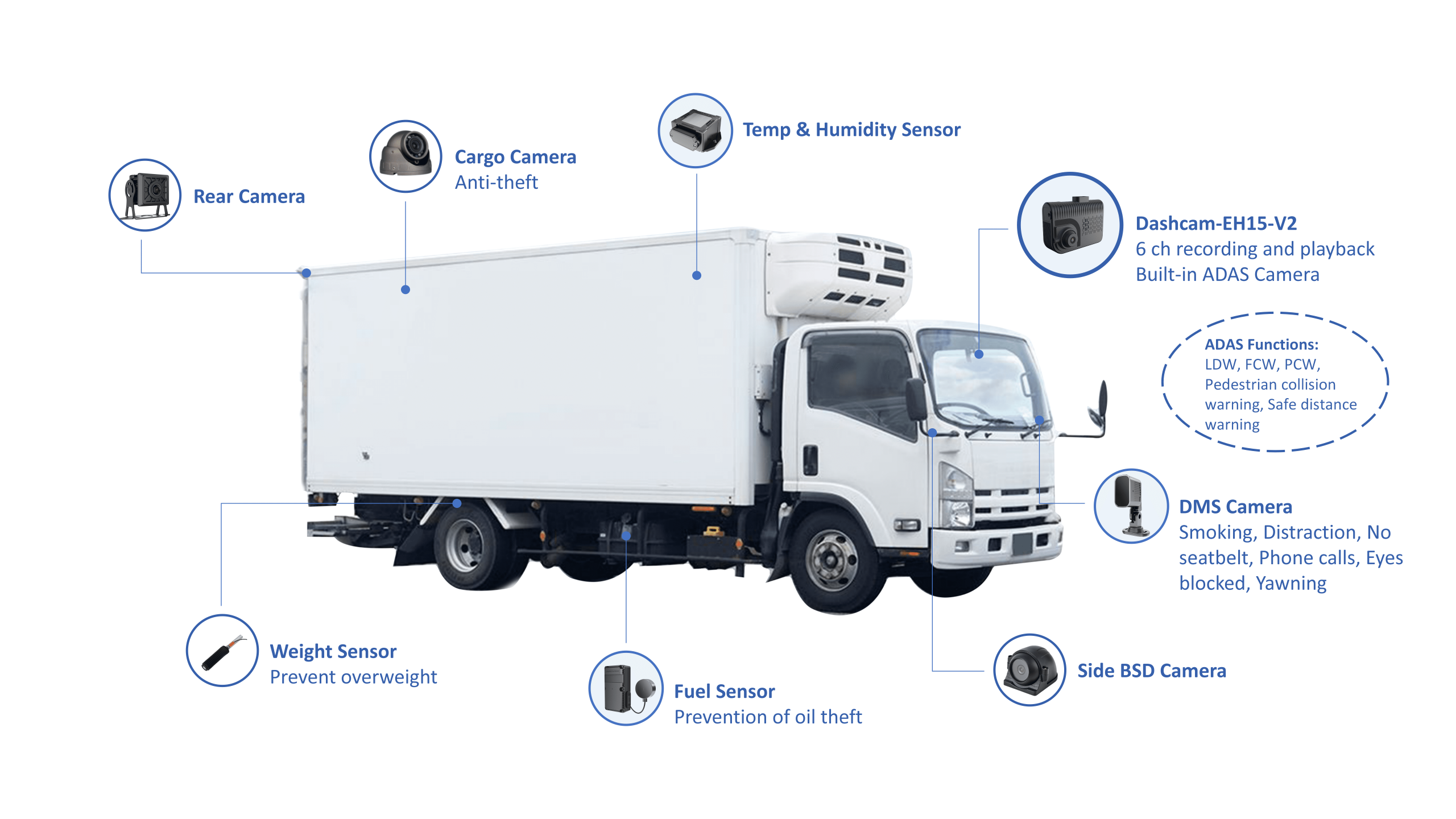
Buy for function, not buzz. Insist on:- On-device vision models to reduce upload volume.- Tamper-evident storage and cryptographic hashing for evidence integrity.- Multi-channel inputs: forward, inward, and CAN-bus integration.- Clear latency metrics for alerting and live monitoring.These specifics separate a tool from a liability. If an AI model flags an incident, you need incontrovertible provenance for that file.
Integration checklist — make installs work
Install failures are predictable. Run a short checklist before you approve a rollout:- Match camera angles to driver tasks; validate in a stationary test and a short road loop.- Configure sensitivity per vehicle type; heavy rigs need different thresholds than vans.- Route event data into your fleet manager and claims system; avoid manual exports.- Train dispatch and safety teams in reading event confidence scores.A well-configured AI powered dashcam lowers false positives and keeps teams focused on real risk.
Pitfalls integrators and operators keep repeating
These mistakes destroy ROI:- Letting vendors set default sensitivity and never revisiting.- Treating video as a compliance checkbox instead of an operational input.- Neglecting privacy controls — drivers must have clear policies and camera privacy zones.- Forgetting offline behavior: poor cellular coverage requires robust local retention.Avoiding these is a discipline. It’s maintenance as duty, not one-off installation.
Short alternatives review
Cameras alone are cheap; smart systems are not. Options:- Basic dashcams: cheap, high storage, low insight.- Cloud-only systems: simpler updates, high bandwidth cost.- Edge-AI MDVRs: upfront cost, drastically lower storage and review time.Pick edge processing when you need immediate, reliable incident detection and reduced data transfer. Nothing else scales quietly under constant operational load.
Final synthesis: resolve the problem with practical choices
Decide on measurable goals: reduce manual review hours, cut false alerts, secure evidence chain. Start small, configure tightly, and audit results weekly. The right design reduces operational noise and protects fleets from the slow erosion of risk. Implemented with discipline and proven components from BSJ, the system becomes less about showing what happened and more about preventing it—quiet work that keeps fleets moving while the world watches.