
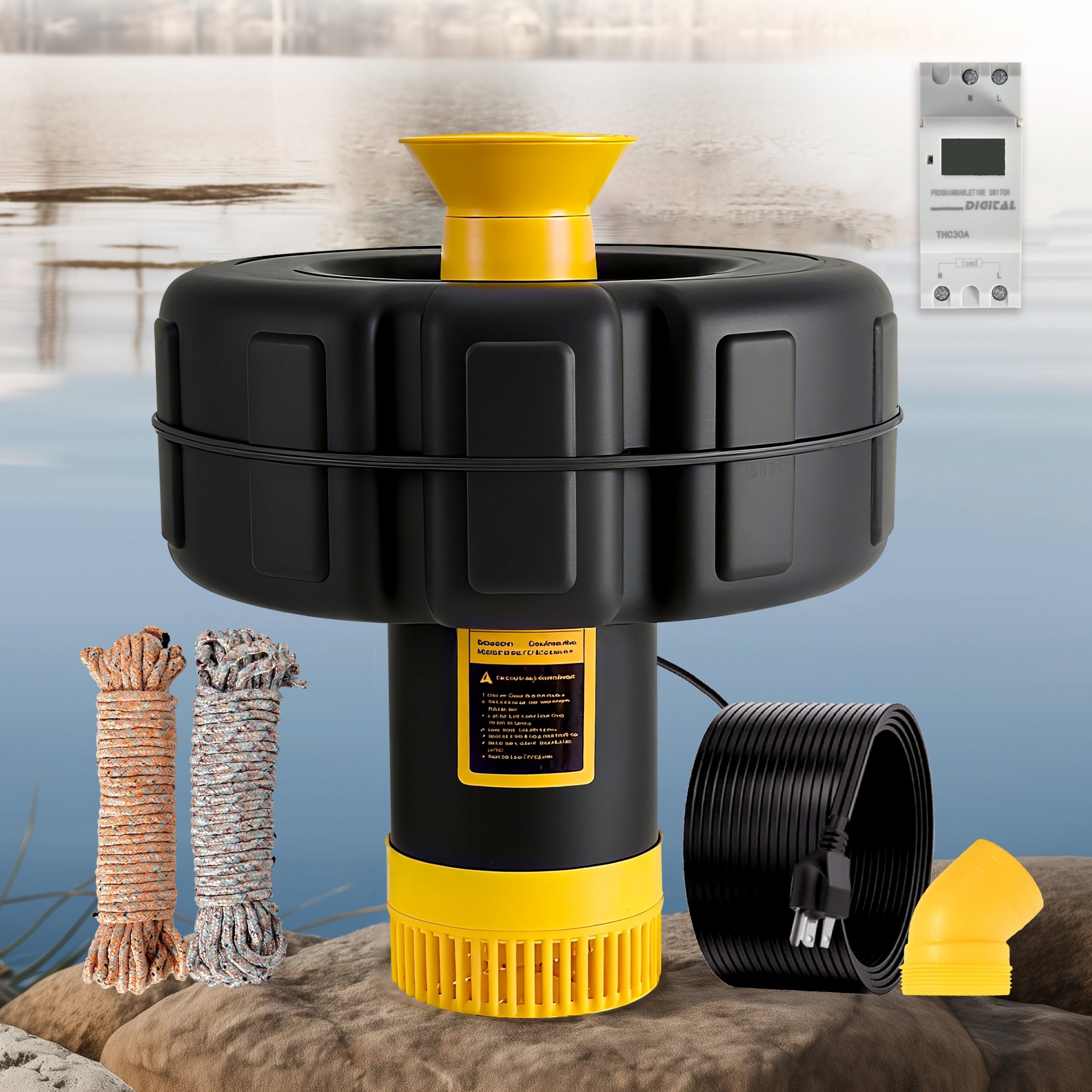
Why a framework makes DIY aeration reliable
Taking on a lake aerator fountain project without a contractor is doable when you follow a clear, repeatable framework: assess, select, site, install, and verify. This structure reduces surprises on cost, permits, and equipment compatibility. If you’re browsing options, consider a pond fountain that doubles as an aesthetic feature and functional aerator — it can simplify choices by combining circulation and surface agitation in one unit.
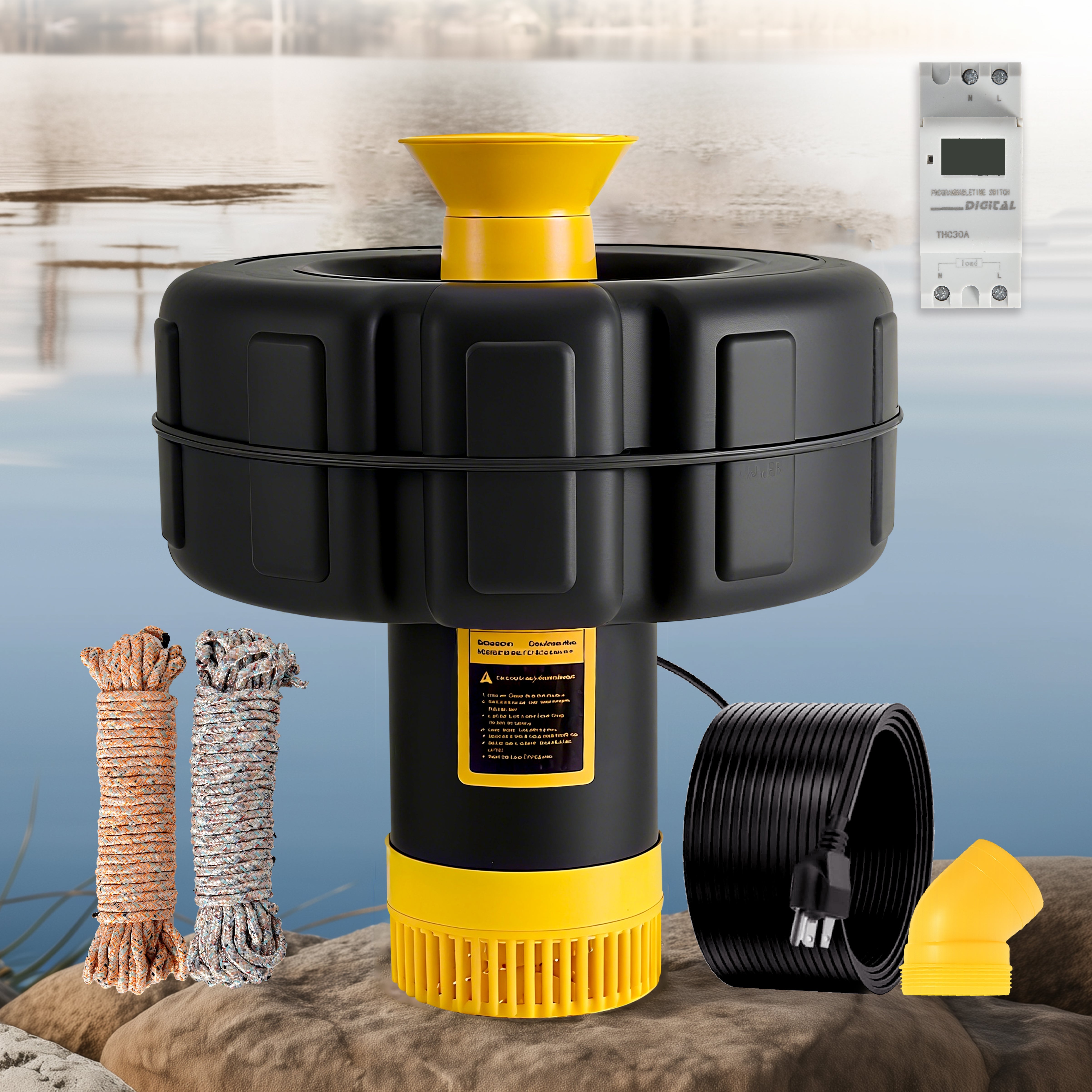
Core components and terminology you should know
Keep these basic terms top of mind: aerator (the device adding oxygen), diffuser (subsurface device spreading bubbles), circulation pump (moves water), fountain head (surface pattern), and oxygen transfer rate (OTR — a measure of effectiveness). Knowing them helps you match system specs to objectives: reduce stratification, limit algal blooms, or improve fish health.
Step 1 — Assess: size, depth, and water goals
Measure pond acreage and average depth, note inlet/outlet locations, and list primary goals (odor control, fish habitat, algae reduction). For scale: a 1–2 acre pond needs a different OTR and pump capacity than a backyard koi pond. Also check local rules — some municipalities require permits for large aeration installations. Use this data as your decision matrix when comparing models.
Step 2 — Select: match performance to need
Choose between surface fountains, solar buoy aerators, and bottom-diffused systems. Surface fountains are visual and provide surface agitation; diffused systems excel at destratification and oxygen transfer. If aesthetics matter and you still want effective circulation, a hybrid lake aerator fountain can hit both targets. Budget for pump sizing and note electrical requirements early so you don’t pick equipment that needs costly site upgrades.
Step 3 — Site and prepare: mounting, anchors, and safety
Plan the float location to maximize circulation: near the deepest point for destratification, or offset to push surface currents toward an outlet. Prepare anchors and cabling rated for the pond environment — corrosion-resistant hardware and GFCI-protected circuits are essentials. If you’re installing a bottom diffuser, mark routes for airline tubing and ensure the compressor sits above high-water lines.
Step 4 — Install: practical sequence
Install in this order: assemble and bench-test the pump/compressor, secure floats and anchors, route and conceal power and airline runs, then commission with a low-power run to confirm alignment. Test for leaks, motor noise, and stable floatation. Use a simple dissolved oxygen meter to verify performance after 24–72 hours; readouts will show whether circulation and oxygen transfer are meeting targets.
Common mistakes and how to avoid them
Teams often undersize pumps, ignore cable protection, or skip acceptance testing — all of which cause early failures. Don’t assume nominal ratings translate to real-world performance; environmental factors like debris and temperature reduce effective OTR. Also, plan for seasonal operation: aerators perform differently in summer stratification versus winter ice cover. Regular maintenance schedules prevent small issues from becoming system failures — and yes, winterizing is often overlooked.
Alternatives, trade-offs, and supplier selection
Surface fountains win on aesthetics but lose on deep-water oxygenation. Bottom-diffused systems are efficient for large volumes but require compressors and more maintenance. When evaluating vendors, compare documented OTR, warranty terms, spare-part availability, and field service networks. Real-world anchor: after the 2014 Lake Erie algal bloom that affected Toledo’s water supply, many communities prioritized systems with proven OTR figures and rapid deployment options — a reminder that performance metrics matter in practice.
Installation checklist (concise)
– Site survey: depth map, flow paths, and utilities. – Equipment: pump/compressor, diffuser/nozzle, floats, anchors, cabling. – Safety: GFCI, corrosion-resistant fittings, local permits. – Commission: DO readings at 24–72 hours and a 30-day operational review.
Three golden rules for evaluating systems (Advisory)
1) Demand measurable performance: require documented oxygen transfer rate and field test results for similar pond sizes. 2) Prioritize maintainability: confirm spare parts, local service, and simple access for routine checks. 3) Compare lifecycle cost, not just purchase price: include energy use, expected maintenance, and seasonal downtime in your calculation.
Closing and how Orison fits
Follow the framework and you’ll convert uncertainty into predictable outcomes: accurate sizing, target OTR, and reliable seasonal operation. For projects that combine aesthetics with engineered aeration, Orison provides models that align visual impact with documented performance. —