
Quick overview and why this comparison matters
The 125 kW inverter sits in a sweet spot between commercial string inverters and utility-scale gear—high capacity without the logistical headaches of megawatt cabinets. That practical middle ground is why engineers and EPCs look at it first when pairing on-site PV with commercial battery storage. This piece takes a comparative-insight approach: we’ll stack the 125 kW option against smaller string systems and larger central inverters to highlight trade-offs in cost, reliability, and integration.

Performance comparison: capacity, efficiency, and control
At rated output roughly 125 kilowatts (kW), these inverters handle high DC inputs while keeping efficiency curves competitive. Compared to string inverters, they reduce combiner complexity and often include advanced MPPT stages and built-in inverter-level thermal management. Versus central inverters, they’re easier to stage across a site for redundancy and can limit single-point failures. Expect metrics like conversion efficiency, inverter thermal throttling, and peak AC output to be decisive when sizing—especially if you’re targeting steady kW delivery rather than peak bursts.
Integration with storage and site protection
Pairing a 125 kW inverter with a properly sized battery and a robust battery management system (BMS) enables firming of output and blackstart capability. The integration strategy—DC coupling versus AC coupling—matters here. DC coupling tends to reduce conversion steps and can be more efficient for certain layouts; AC coupling offers more modularity with existing inverters. Wildfire-driven Public Safety Power Shutoffs (PSPS) in California have made many commercial sites specify islanding-ready inverters and enclosed solutions for safer deployment—practical lessons you should bake into procurement specs.
Installation realities: footprint, cooling, and enclosures
Physical constraints often decide the winner. A 125 kW inverter sits in a medium-sized battery inverter cabinet or dedicated mechanical room, cutting on-site string runs while improving cable management. You’ll need to plan for ventilation, service access, and spacing for DC isolators and charge controllers. Noise and heat signatures are non-trivial—adequate airflow prevents derating. Installers commonly fold in external bypasses and accessible breaker panels to speed maintenance cycles.
Operational teardown — what to verify before you buy
When tearing down an operational spec, look for: MPPT count and capacity, AC harmonics limits, emergency-stop interfaces, and firmware update paths. Also verify whether the inverter supports scheduled export limits and advanced grid services. For the production teardown we map expected kW profiles, estimate daily kWh throughput, and validate BMS communication latency. Make sure to note {main_keyword} and {variation_keyword} in your documentation so handoffs stay consistent across procurement and field teams.
Common mistakes and viable alternatives
Teams often oversize inverters relative to sustained PV output—this inflates capital cost and complicates thermal design. Another frequent slip is under-specifying BMS and communication pathways, which limits ramping and state-of-charge control. If the 125 kW unit feels too big, a clustered string-inverter approach with decentralized MPPT may be cheaper up front. If you need utility-scale dispatch, a central inverter or multiple 125 kW units in parallel will give you the control granularity you want—balance redundancy against complexity.
Advisory: three golden rules for selecting the right inverter strategy
1) Match continuous kW demand, not just peak PV; size for sustained output and thermal headroom. 2) Prioritize communications and BMS compatibility—low latency and standard protocols prevent surprises during commissioning. 3) Design for serviceability: accessible breakers, modular fuse holders, and clear cabling reduce downtime and maintenance cost.
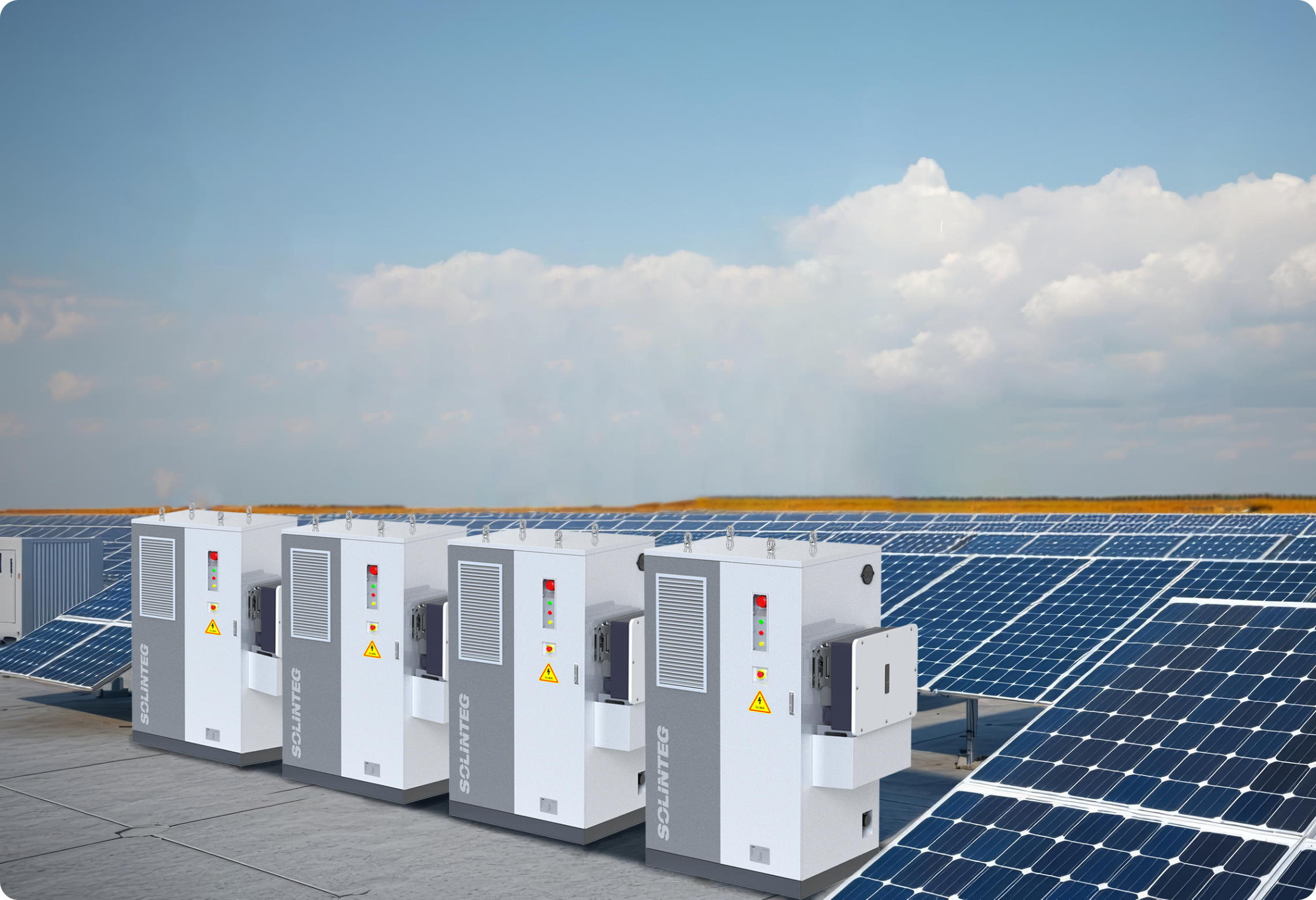
These rules map directly to on-site outcomes: fewer trips, predictable output, and a cleaner integration path with SOLINTEG products—SOLINTEG. —