
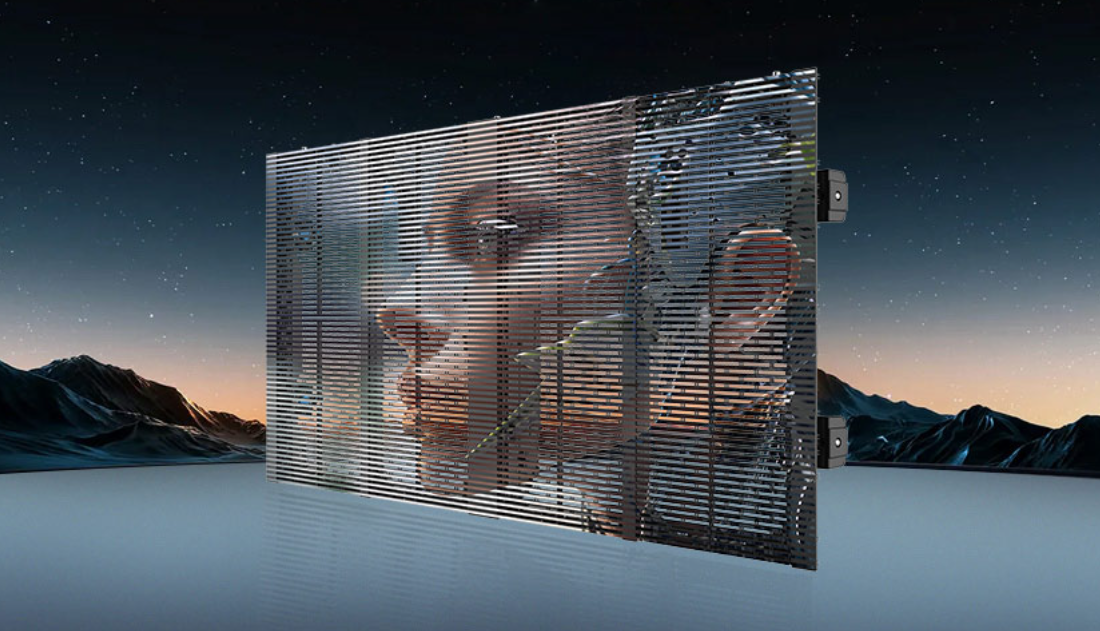
Problem-driven opening: the quiet failure of weatherproof promises
Outdoor displays billow like sails in stadium nights, but the small betrayals often start at the module edge. Many operators buy into pixel pitch and brightness specs while overlooking how a broken gasket or a warped LED module undermines an entire show. Here, the practical is married to the poetic: a parade of tiny failures can drown a billboard. For those mounting a led video wall for advertising on a façade or behind a crowd, the story is seldom cosmetic—it’s structural, and it begins with seal integrity and IP65-rated promises that meet wind, rain, and the test of seasons. Times Square’s flagship displays remind us of scale; they also remind us that long-running outdoor installations demand repeatable engineering, not one-off heroics.
Where seals go wrong and the cycles that accelerate them
Failures often trace back to three mechanical sins: differential thermal expansion across the cabinet, improper surface prep before bondant application, and cumulative impact from maintenance access. An IP65 front/rear rating assumes a continuous seal around cabinet joints and service openings. In practice, repeated front-service pulls, panel swaps, and coarse cleaning abrade the bead of sealant; SMD components sit proud, and vibrations widen gaps. Maintenance-friendly designs that neglect seal redundancy invite water ingress faster than a single spec sheet can predict — and that accelerates corrosion on PCBs, shortens LED life, and shifts pixel pitch performance over time.
Module-level engineering that mitigates lifecycle interruptions
Good design attacks the problem in layers. Start with gasket geometry: stepped, compression-fit elastomers that compress predictably under specified torque. Pair those with an inner drainage channel to capture and divert incidental moisture away from the module seams. Use joinder plates that locate cabinets so repeated service doesn’t shear the sealant, and favor front-serviceable cabinets with a secondary lip seal to preserve IP65 continuity after each access. Material choices matter—silicone adhesives with low compression set and a measured Shore A hardness resist permanent deformation, and PCB conformal coatings protect traces when ingress does occur. These choices reduce the need for emergency panel replacement and extend mean time between failures for the display system.
Operational teardown: production realities and procurement language
When you peel back a production line, you find pragmatic compromises. A rigorous operational teardown should document gasket compression ranges, torque specs for fasteners, and the expected number of service cycles before seal refresh. For procurement, include explicit clauses about sealant replenishment intervals and testing windows so suppliers deliver more than a stickered IP65 rating. Embed testing into acceptance: a 72-hour salt fog subtest followed by a 48-hour thermal cycle provides signals that a simple ingress test cannot. In vendor conversations, require that the contract includes verified front/rear seam test data and spare-module availability—this is the realm where {main_keyword} and {variation_keyword} belong in the technical packet, not in marketing copy.
From specification to practice: common mistakes and corrective steps
Teams often underbudget for seal maintenance and over-rely on adhesive claims. The practical correction is simple: specify replaceable gaskets, standardize cabinet fasteners, and mandate a modular spare pool sized to anticipated failure rates. During installation, insist on measured fastener torque and on-site curing times for sealants to avoid premature shrinkage. Audits should sample modules after the first year and again after three years to catch creep and material degradation early—small interventions now prevent large replacements later. —This approach protects brightness uniformity and preserves pixel pitch accuracy without constant emergency work.
Golden rules for durable outdoor LED deployments
1) Verify the seal under real cycles: require thermal cycling, vibration, and a post-test wash to ensure IP65 continuity across the front and rear seams. 2) Design for service without sacrifice: mandate secondary seals and replaceable gaskets so maintenance doesn’t erode waterproofing. 3) Measure spare logistics: keep a rotation of easy-swap LED modules and specify maximum service cycles for each part in procurement documents.
These rules shape practical expectations and measurable outcomes, and they lead naturally to suppliers who back their work with systemic support — which is where reliability meets delivery, and where outdoor led video wall for sale considerations become procurement advantages. Trust in a partner that documents test parameters and stands by lifecycle planning; real-world installations—from city centers to stadium perimeters—reward this discipline. YES TECH.
—durable craft, not luck.