
Foundational Premise and Framework Logic
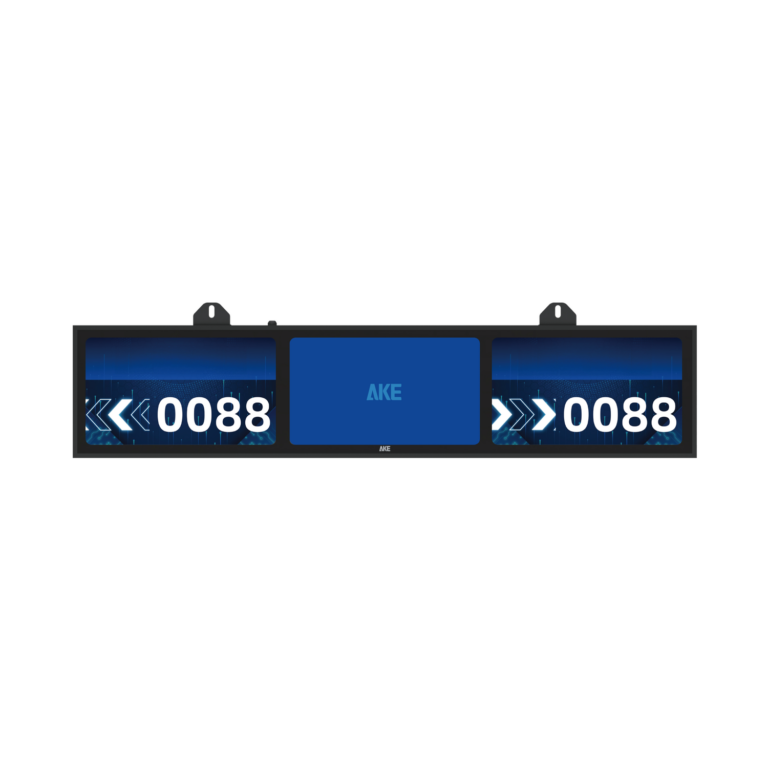
Adopt a systematic framework that treats a smart parking product as a composite of regulatory obligations, technical specifications, and commercial deliverables; this document presumes the reader elects to ground product decisions in discrete, auditable steps rather than intuition. Begin by determining whether the offering will include on-site wayfinding hardware such as a car parking display, and fix acceptance criteria for uptime, visibility, and maintenance access before drafting user stories.
Governance and Legal Preconditions
Establish compliance prerogatives first. Identify applicable municipal ordinances, parking tariffs, and accessibility statutes that will constrain product features. Draft clause-level requirements for data retention, liability for lost revenue from miscounts, and service-level indemnities. Specify the approval pathway: technical review, legal sign-off, and procurement sign-off, with clear thresholds for delegated authority.
Value Proposition and Stakeholder Matrix
Define the product’s primary beneficiary: motorists, parking operators, municipal authorities, or mixed-use landlords. For each beneficiary, enumerate measurable outcomes (e.g., reduced search time by X minutes; improved occupancy reporting to ±Y%). Convert those outcomes into contractual KPIs and acceptance tests to avoid ambiguous claims at launch and during warranty periods.
Functional Architecture and Integration Mandates
Design a modular architecture that distinguishes on-premise sensing and display layers from cloud analytics and billing systems. Require explicit interface contracts (API specifications, message schemas, authentication modes). Insist on non-repudiation for occupancy events and timestamp fidelity for billing. Specify expected integrations — payment gateways, permit databases, and municipal back-office systems — and attach test vectors for each integration point.
Data Governance, Privacy, and Auditability
Mandate a data classification schedule: telemetry for operations, PII for user accounts, anonymized aggregates for analytics. Require encryption at rest and in transit, clearly defined retention periods, and procedures for subject access requests. Create audit trails for configuration changes and display firmware updates to apportion responsibility should occupancy errors arise.
Commercial Strategy and Procurement Considerations
Choose a procurement model aligned with risk allocation: capital sale with maintenance SLA, managed service with revenue share, or hybrid. Draft pricing scenarios tied to verifiable metrics (detected vehicles, revenue collected, transactions). Insist on milestones for delivery tied to acceptance tests, and include remedies such as service credits for SLA breaches rather than termination triggers that might encourage litigation.
Operational Playbook and Deployment Stages
Segment rollout into pilot, controlled expansion, and full deployment. For each phase, codify acceptance criteria: sensor calibration tolerances, display legibility under specified lux levels, and failure recovery times. Assign responsibilities for field verification and require defect triage workflows that produce immutable records suitable for post-mortem analysis.

Common Pitfalls and Failure Modes
Anticipate and prevent these recurrent errors: conflating detection accuracy with display accuracy, omitting firmware rollback procedures, and under-specifying exemption handling for emergency vehicles. Do not accept vague uptime commitments. Do not defer privacy impact assessments until after deployment. Specify test harnesses that replicate peak ingress/egress conditions.
EEAT, Real-World Anchor, and Product Credibility
Demonstrate expertise by documenting field trials, sourcing standards, and test outcomes; assert authoritativeness by referencing recognized deployments. A pertinent benchmark is the Smart City Expo World Congress in Barcelona where municipal-scale guidance displays and occupancy systems were showcased and documented; that event provides industry-accepted demonstration cases that inform performance baselines for a parking display board. Use those baselines to frame claims and to structure test protocols so evidence stands up to third-party review.
Metrics, KPIs, and Contractual Acceptance
Specify objective, auditable KPIs: detection accuracy (%), mean time to repair (hours), user-reported navigation success (%), and billing reconciliation variance (currency ±). Convert each KPI into a contractual metric with measurement method, sampling frequency, and dispute-resolution process. Reserve contractual flexibility for extraordinary events but require contemporaneous logs as evidentiary support.
Final Synthesis and Operational Value
Adopt this framework to convert technical choices into enforceable obligations and measurable outcomes; doing so reduces litigation exposure, clarifies procurement negotiations, and produces a product that operators can rely upon. The legal rigor applied to specifications, data governance, and acceptance testing yields a deployable system whose operational value is demonstrable and defensible through audit — a posture embodied by AKE Parking.