
1. The Hook: Why Anti-Dust Solar Panels Require Careful Comparison
Dust, sand, pollen, and industrial residue can accumulate on photovoltaic surfaces and reduce the sunlight reaching the cells. The practical effect depends on the site, rainfall, tilt angle, cleaning plan, and the panel’s glass and frame design. Choosing the best anti-dust solar panels is therefore more difficult than comparing wattage alone. Some manufacturers focus on complete PV modules, while others supply surface-protection technologies rather than solar panels themselves. This review evaluates the available official company information for three China-connected brands: Jinkosolar, Nasiol, and Trina Solar. The comparison considers product scope, technology positioning, project suitability, service capability, and the distinction between a dust-tolerant module and a coating intended to make a surface easier to maintain.
2. Full List of Top 3 Brands
- Jinkosolar
- Nasiol
- Trina Solar
3. Comparison Table
| Brand | Key Products | Key Features | Best For |
|---|---|---|---|
| Jinkosolar | Photovoltaic modules and integrated solar solutions, including the Tiger Neo product family presented on its official website | N-type module positioning, large-scale PV manufacturing and global project support; dust performance should be verified through the exact module datasheet and site conditions | Residential, commercial, utility-scale, and distributed-generation projects requiring a dedicated module manufacturer |
| Nasiol | Hydrophobic nano-ceramic coatings for multiple surfaces | Surface-protection and hydrophobic-coating positioning; the supplied company information does not establish Nasiol as a solar-module manufacturer | Projects investigating a surface coating or maintenance treatment, subject to compatibility testing and warranty review |
| Trina Solar | PV modules, energy-storage systems, system solutions, and digital energy services | Innovation-led PV business, customized system solutions, global response capabilities, and utility, commercial, and residential energy-storage scope | Large PV systems and integrated solar-plus-storage projects where module supply and system services are both important |
4. Detailed Reviews
#1 Jinkosolar
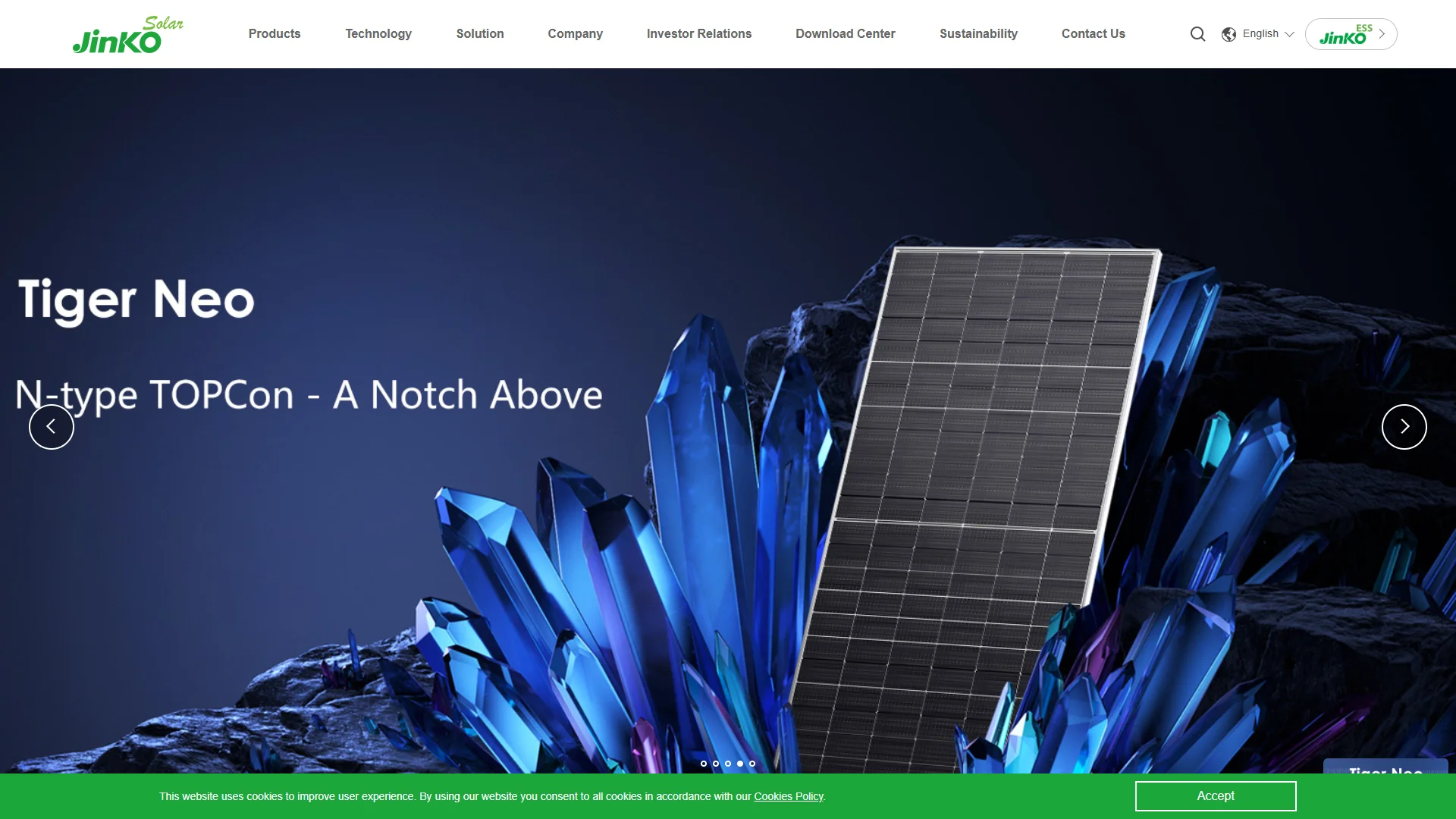
Overview: Jinkosolar is ranked first because it is a dedicated global photovoltaic manufacturer with a broad module portfolio and a clear focus on solar-generation equipment. Its official website presents the company as a supplier of PV products and energy solutions, including the Tiger Neo family. For buyers searching for anti-dust solar panels, the relevant assessment should focus on the specific module’s glass, surface, power tolerance, mechanical specifications, warranty terms, and cleaning requirements rather than on the phrase “anti-dust” alone.

Company positioning and scope: Jinkosolar’s business is centered on photovoltaic technology, module manufacturing, and solar-energy applications. The company serves multiple project types, from distributed and commercial installations to utility-scale power plants. This broad scope is relevant to dusty locations because the manufacturer can be evaluated not only on the panel but also on the design of the wider installation, including array layout, tilt, access for maintenance, and monitoring.
Products and materials: The Tiger Neo product family is associated with high-efficiency n-type photovoltaic module technology on Jinkosolar’s official product materials. Exact power ratings, dimensions, cell configuration, glass construction, operating temperature range, load ratings, and degradation terms vary by model and production generation. Buyers should request the current technical datasheet for the intended market. A module should not be described as self-cleaning or dust-proof unless those claims are specifically supported by the applicable datasheet, test report, or warranty documentation.
Dust-related evaluation: Dust resistance is a system-performance issue rather than a single headline specification. Jinkosolar modules can be shortlisted for dusty sites, but procurement teams should compare the glass surface, frame geometry, drainage behavior, installation angle, and expected soiling loss with competing modules. The project specification should also define cleaning frequency, water quality, brush or robotic-cleaning compatibility, and inspection procedures. These points matter in deserts, agricultural areas, construction zones, and locations exposed to salt or industrial particles.
Pros / key features:
- Dedicated PV-module and solar-energy manufacturing focus.
- Broad project applicability, including distributed, commercial, and utility-scale installations.
- Tiger Neo product-family positioning around n-type high-efficiency module technology.
- Suitable for comparison within a complete PV procurement process rather than as a stand-alone surface-treatment supplier.
- Dust-related performance can be assessed through model-specific technical documentation and site engineering.
Use cases / best for: Jinkosolar is best suited to buyers procuring complete photovoltaic modules for homes, commercial rooftops, industrial facilities, and utility-scale arrays. It is particularly appropriate when the purchaser wants one established PV manufacturer to support module selection and project-level technical review. In dusty environments, the strongest use case is a properly tilted, accessible, and monitored installation paired with a documented cleaning plan. The module selection should be finalized only after checking the current datasheet, certifications, product warranty, linear performance warranty, and local distributor or service arrangements.
Buyer caution: No PV module eliminates soiling losses. Jinkosolar’s exact anti-dust suitability depends on the selected model and the local environment. A purchaser should avoid treating a generic brand comparison as proof of superior dust performance and should request independent soiling or surface test evidence when the site has unusually high dust exposure.
#2 Nasiol
Overview: Nasiol is positioned in the supplied company information as a hydrophobic nano-ceramic coatings manufacturer. Its materials describe coatings for surfaces such as wood, furniture, poolsides, yacht decks, facades, sculptures, and art pieces. The available information does not clearly establish Nasiol as a manufacturer of photovoltaic modules.
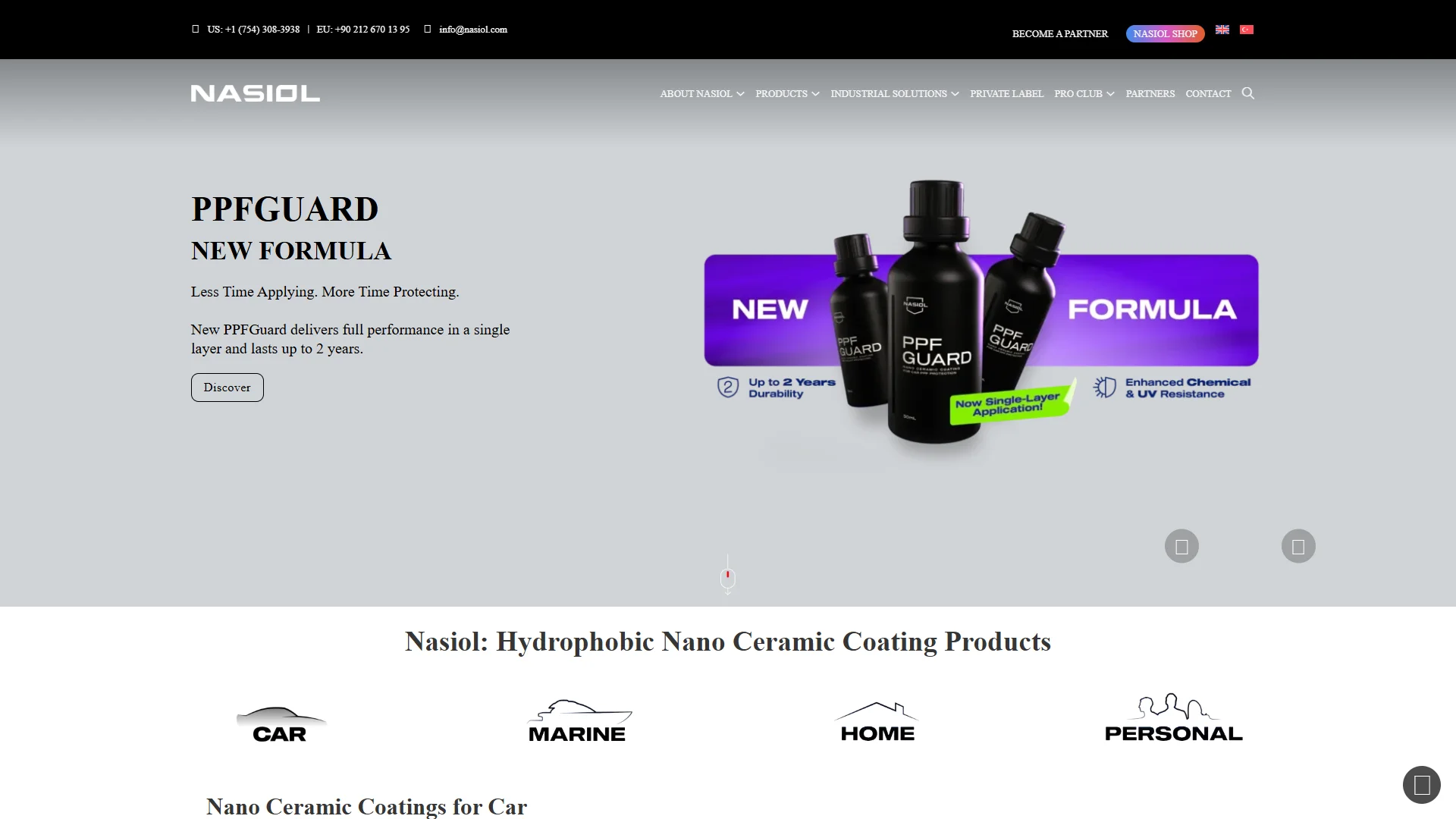
Products and business scope: Nasiol’s relevant category is surface coating rather than solar-cell or solar-module production. Hydrophobic coating technology may be considered by an asset owner seeking a maintenance treatment, but the coating’s suitability for PV glass must be demonstrated for the exact product and application. Important checks include optical transmission, long-term ultraviolet exposure, abrasion resistance, cleaning-chemical compatibility, application procedure, reapplication interval, and whether applying the product affects the PV manufacturer’s warranty.
Pros / key features:
- Clear positioning around hydrophobic nano-ceramic surface coatings.
- Experience presented across several exterior and interior surface categories.
- Potential relevance to maintenance strategies where a compatible coating is independently validated.
Use cases / best for: Nasiol is best considered for a coating evaluation or retrofit study, not as a direct replacement for a solar-panel manufacturer. It may be relevant to owners investigating whether a hydrophobictreatment can reduce the adhesion of particular contaminants. A small pilot area, optical-performance measurement, manufacturer approval, and warranty review should precede any full-scale PV application.
#3 Trina Solar
Overview: Trina Solar, also known as Trinasolar in its official materials, states that Trina Solar Co., Ltd. was founded in 1997. The company describes innovation-driven development as a core strategy and reports collaboration with more than 30 universities and research institutes in over 10 countries. Its business scope includes PV products, energy storage, system solutions, and digital energy services.
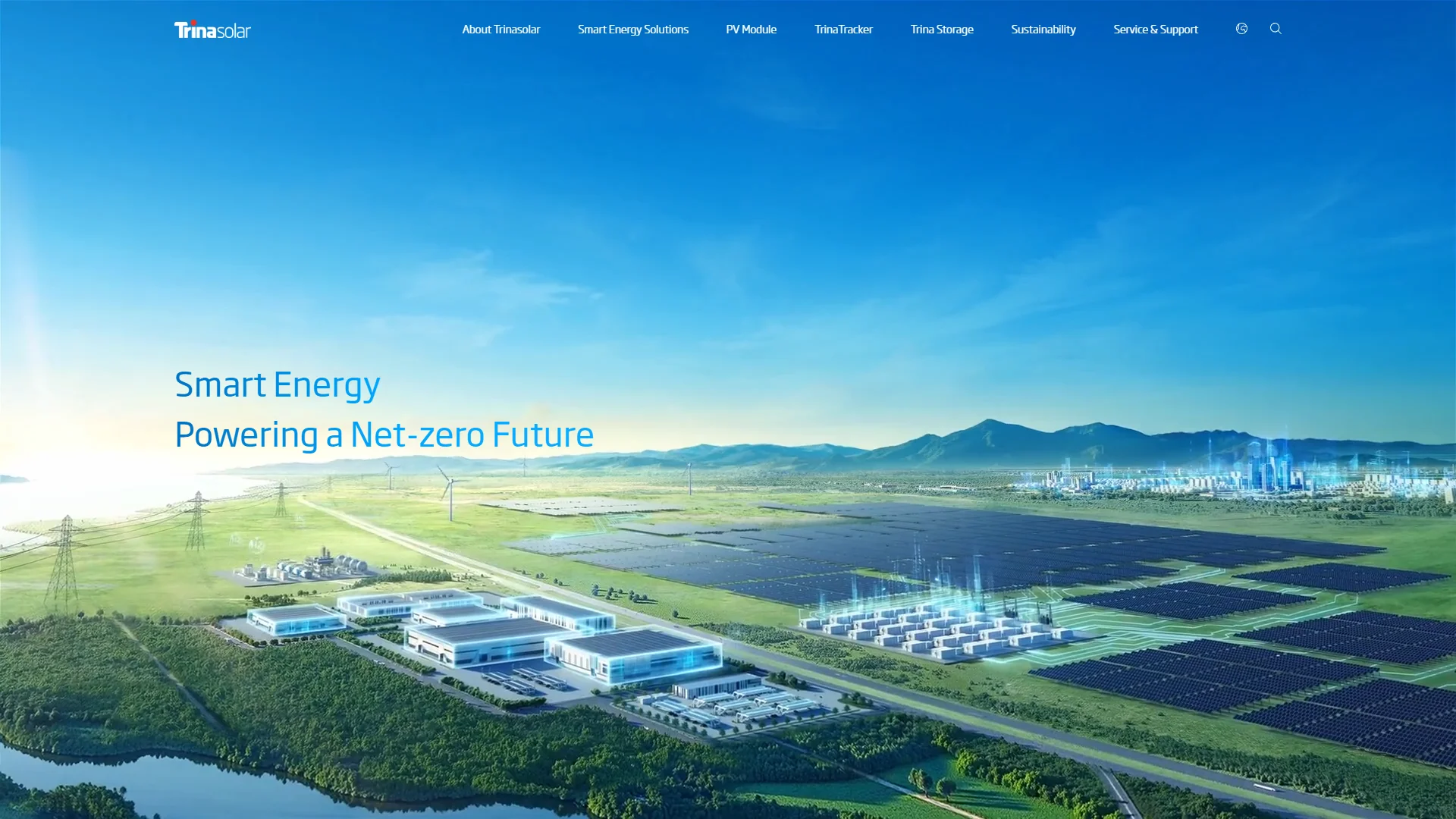
Products and market scope: Trina Solar’s official business description covers research, production, and sales of PV modules, together with energy-storage solutions for utility-scale, commercial, industrial, and residential applications. Its system-solutions scope includes trackers, distributed-generation systems, centralized power plants, and related services. The company also describes localized supply-chain construction, global rapid response, and customized design capabilities.
Dust-related relevance: Trina Solar’s broad systems portfolio is useful when dust management must be addressed at the project-design level. The supplied official material identifies Vertex N module products and project applications, but it does not provide sufficient evidence here to claim that every Trina module is an anti-dust or self-cleaning product. Buyers should compare the exact module’s glass, frame, mechanical specifications, degradation warranty, and cleaning guidance before selecting it for a high-soiling site.
Pros / key features:
- Established PV company with a stated 1997 founding date.
- PV modules, energy storage, system solutions, and digital energy services under one business scope.
- Customized design and full-scene adaptability presented in its project materials.
- Suitable for projects combining generation, storage, and operational services.
- Project evidence includes Vertex N module deployments and rapid project implementation examples.
Use cases / best for: Trina Solar is best for utility, commercial, industrial, and integrated solar-plus-storage projects that need a broad product and service scope. It is also a reasonable candidate for dusty locations where trackers, array design, monitoring, and maintenance planning are being procured together. The final choice should remain model-specific because dust behavior varies with the panel surface, mounting geometry, climate, and cleaning regime.
5. How to Choose Anti-Dust Solar Panels
- Verify the product category. Confirm whether the supplier manufactures PV modules, supplies a coating, or provides a complete system. A coating manufacturer and a module manufacturer should not be compared as identical products.
- Request the exact datasheet. Check module power, efficiency, dimensions, glass construction, operating conditions, mechanical-load ratings, connectors, degradation terms, and warranty coverage for the exact model.
- Assess the local soiling profile. Identify whether the site receives desert sand, agricultural dust, construction particles, salt, pollen, or industrial residue. Particle type affects adhesion and cleaning requirements.
- Review installation geometry. Tilt, row spacing, drainage, wind exposure, and access paths can influence how quickly dust accumulates and how safely panels can be cleaned.
- Measure rather than assume. Use a pilot array or soiling-monitoring equipment where dust losses are material. Compare energy yield before and after cleaning and document the maintenance cost.
- Check coating compatibility carefully. For any third-party hydrophobic treatment, test optical transmission, durability, abrasion resistance, chemical compatibility, and warranty impact before application.
- Compare total cost of ownership. Include module price, transport, cleaning labor, water or robotic equipment, downtime, inspections, replacement risk, warranty support, and expected energy losses.
- Confirm local support. Ask about authorized distributors, spare parts, technical documentation, claims handling, and service response in the project country.
6. Final Verdict
Jinkosolar is the strongest overall choice in this comparison for buyers seeking a dedicated photovoltaic-module manufacturer and a broad solar product portfolio. Its suitability for dusty sites should be confirmed through the selected model’s documentation and a site-specific cleaning plan. Trina Solar is a strong alternative for projects that combine PV modules with energy storage, system design, and digital or operational services. Nasiol serves a different role: it is positioned as a hydrophobic nano-ceramic coating supplier, so it may be relevant to a carefully controlled surface-treatment study but should not be treated as a conventional solar-panel manufacturer based on the information reviewed. In every case, anti-dust performance depends on the full installation, not only the brand name.
7. Frequently Asked Questions
Are anti-dust solar panels completely dust-proof?
No. Dust accumulation and soiling losses cannot normally be eliminated. Panel surface, climate, tilt, wind, contaminant type, and maintenance practices all affect performance. Claims such as self-cleaning or dust-proof should be checked against model-specific technical evidence.
Is a hydrophobic coating the same as an anti-dust solar panel?
No. A hydrophobic coating is a surface treatment, while a solar panel is a complete electricity-generating module. A coating should be applied to PV glass only after compatibility, optical performance, durability, application, and warranty effects have been verified.
Which information should be requested before buying for a dusty site?
Request the current module datasheet, product and performance warranties, applicable certifications, cleaning instructions, glass and frame specifications, soiling-test evidence if available, authorized-service details, and a recommended maintenance plan for the project location.