
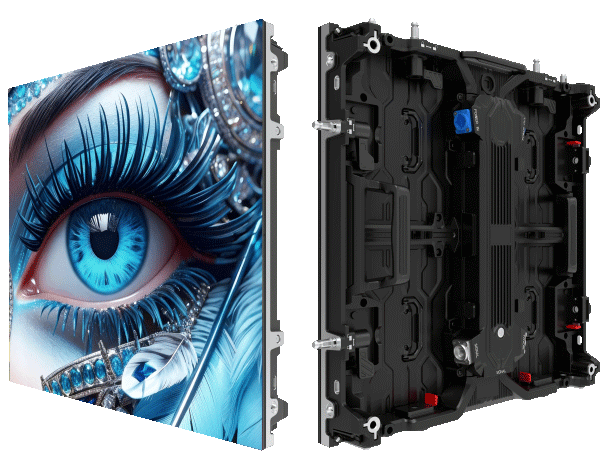
Tracking the shift
The move from coarse LED modules to high-density MicroLED systems reads like an engineering-driven story of miniaturization and integration. Early stages favoured large cabinets and visible seams; today’s background screens hide seams with sub-millimeter pixel pitch and sophisticated board layouts, letting content read clean at close range. This change reshaped live events and rentals — a technician at a trade show will now book a rental LED display that behaves more like a continuous canvas than a stack of panels. A practical anchor: the Tokyo 2020 staging highlighted how tighter pixel pitch and better calibration handle broadcast cameras and stadium sightlines, proving the concept on a global scale.
Technical inflection points
Three developments accelerated the evolution: denser SMD packages, multi-layer PCB routing, and improved calibration workflows. Denser SMDs reduce pixel pitch while multi-layer PCB designs manage power, signal integrity, and heat without bulky cabling. Improved refresh rate and color management reduce flicker on high-speed cameras, which was a major limitation for early LED walls. Firmware and testing tools now automate calibration across cabinets, so color gamut and luminance remain uniform across a large canvas — less manual tweaking, more predictable results. — This small aside matters: installers who ignore calibration waste time and risk client complaints.
How high density changed rental logistics
Higher density altered how event planners approach led wall rental. Smaller pixel pitch pushes decisions earlier: specify viewing distance and camera specs up front, confirm required refresh rate, and match brightness to ambient light. Rental stacks must account for cabinet tolerances and thermal loads; tighter pitch increases sensitivity to mounting precision and cooling. Common mistakes include underestimating bandwidth needs for high frame rates and choosing a pixel pitch too fine for the viewing distance — both create disappointing results despite glossy specs.
Comparing eras: old LED walls vs MicroLED backgrounds
Older LED walls prioritized durability and cost per square meter. They used larger cabinets, wider seams, and simpler control systems. MicroLED backgrounds trade some of that raw robustness for best-in-class image fidelity: lower pixel pitch, denser multi-layer PCB routing, and refined calibration. The trade-offs are logistical: transport and rigging must be more precise, and service techs need board-level troubleshooting skills. But the viewer-facing advantage is clear — smoother gradients, higher perceived resolution, and better camera compatibility for broadcast or streaming.
Design and procurement checklist
When planning a high-density background screen, consider these practical elements: cabinet flatness and rigging tolerances; signal distribution and control systems; and cooling strategies for sustained brightness. Budget for on-site calibration and a pre-show test run with the exact cameras that will be used. Also evaluate spare-part availability for SMD modules and controllers — shipping a replacement cabinet overnight is very different from swapping a 2010-era module.
Three golden rules for choosing the right high-density LED system
1) Match pixel pitch to real-world viewing distance and camera resolution. Prioritize the right pixel pitch instead of the smallest possible number; opt for the resolution that delivers measurable improvements on camera and for the audience. 2) Specify refresh rate and control bandwidth based on production needs. Choose controllers and cabling that support the target refresh rate and HDR workflows to avoid flicker and color clipping. 3) Verify mechanical and thermal tolerances before booking the screen. Confirm cabinet flatness, mounting precision, and heat dissipation strategies — these are the things that make a screen reliable under load.
Expect measurable differences when these rules are followed: fewer reboots, cleaner broadcast feeds, and faster setup times. For practical outcomes and rental-ready solutions, consider partners that combine product knowledge with on-site support, like MR LED.